Most Vancouver homeowners never think about roof ventilation until something goes wrong: a damp patch on a bedroom ceiling, a musty smell in the attic, or shingles curling years before they should. Roof ventilation is the steady flow of air through your attic, in through vents low on the roof and out through vents near the ridge, and it works quietly in the background to keep the roof structure dry and the shingles at a stable temperature. On the BC coast, where rain falls for months at a time, that airflow matters more than most people realise. This guide explains what roof ventilation does, the signs yours is failing, and what to do about it before a small airflow problem turns into rot, mould or a roof that needs replacing early.
What Is Roof Ventilation and How Does It Work?
Roof ventilation is a system, not a single vent. Cool, dry air enters low on the roof, warms as it travels up through the attic, and leaves high on the roof, carrying moisture and heat with it. For the system to work, intake and exhaust have to be balanced. Too little intake and the exhaust vents pull air from inside the house instead; too little exhaust and the air sits still.
- Intake vents. Usually soffit vents, the slotted or perforated panels under the eaves. They are the entry point for fresh air and need to stay clear of insulation and debris.
- Exhaust vents. Usually a ridge vent along the peak of the roof, sometimes box vents or turbine vents on roofs without a suitable ridge. They let the warm, moist air out.
- Gable vents. Vents in the triangular gable ends of a house. Older Vancouver homes often have these, but on their own they rarely ventilate the whole attic evenly.
- Baffles. Simple channels, usually foam or cardboard, fitted between the rafters at the eaves. They hold the insulation back so air can flow from the soffit vents into the attic.
Why Roof Ventilation Matters in Vancouver's Climate
Vancouver's climate is why roof ventilation deserves more attention here than in a dry city. We get months of rain, long stretches of damp air, and mild temperatures that let moisture linger. That damp air finds its way into the attic from two directions: from outside, through rain and humid air, and from inside the house, because cooking, showers and laundry all release warm, moist air that rises into the attic.
Without steady airflow, that moisture condenses on the coldest surface it can find, usually the underside of the roof deck on a winter morning. Day after day, that condensation wets the wood, feeds mould, and soaks into the insulation. In summer the problem flips: a poorly ventilated attic traps heat under the roof, baking the shingles from underneath and warming the upstairs rooms. Roof ventilation is the one system that deals with both seasons, and it costs nothing to run once it is installed properly.
That is also why ventilation is not a detail to leave until the roof leaks. By the time water shows on a ceiling, the attic may have been damp for a long time. Our guide to how long a roof lasts in Vancouver explains how moisture shortens a roof's life in our rain and moss climate, and ventilation is one of the main reasons some roofs last their full life and others do not.
Signs Your Roof Ventilation Is Failing
It rarely announces itself with one dramatic symptom. Look for a collection of small clues instead.
- A hot, stuffy attic in summer. On a warm day, an attic with working ventilation should feel warm, not stifling. If it feels like a sauna up there, hot air is trapped and the exhaust side is not moving it out.
- Condensation or frost on the underside of the roof deck. Water droplets, damp patches or frost on the plywood in the attic are the clearest sign that moist air is not escaping. Check on a cold morning in late fall or winter.
- Mould or a musty smell. A musty smell when you open the attic hatch, dark staining on the decking or rafters, or visible mould growth all point to air that has been damp for a long time.
- Damp or compressed insulation. Insulation that is wet, matted down or stained has been absorbing attic moisture, and wet insulation insulates poorly, so a damp attic can mean a colder house and higher heating bills.
- Shingles curling, blistering or wearing out early. Heat trapped under the roof cooks shingles from below, which can make them curl, crack or lose granules sooner than their age suggests. If the roof looks much older than it is, poor ventilation is one of the first things a roofer checks.
- Rust on nails and metal in the attic. Rusty nail heads poking through the deck, rust on metal brackets or flashing, and water stains around nail holes are all signs of chronic condensation.
- Ice dams in a cold snap. Vancouver does not get many, but in a cold snap a warm attic melts snow on the upper roof, the water runs down and refreezes at the cold eaves, and the ice can force water back under the shingles.
One or two signs on their own may have another cause, but three or more together is a strong case for a ventilation check. A roof inspection looks at the vents, the soffits and the attic in one visit. Our roof inspection service covers Vancouver, Surrey and the wider Lower Mainland.
What Poor Roof Ventilation Does to Your Roof
Left alone, poor roof ventilation does its damage slowly, which is what makes it expensive: years of damp wood and overheated shingles adding up.
- Rot in the roof deck. Plywood and boards that stay damp eventually soften and rot. A rotten deck cannot hold nails properly and has to be replaced during a reroof, which adds cost and time.
- Mould in the attic. Mould on framing and decking is a health concern as well as a structural one, and remediation is far more disruptive than fixing the airflow that caused it.
- A shorter roof life. Shingles that run hot and damp age faster, so a roof can need replacing years early. That is the most expensive consequence of all.
- Warranty trouble. Some shingle manufacturers require adequate ventilation as part of their warranty terms, so it is worth checking what yours says before you assume a premature failure is covered. Our guide to roofing warranties explains what manufacturer and workmanship warranties actually cover.
- Wasted energy. Damp insulation insulates poorly, and a superheated attic in summer makes the upstairs harder to cool. Both push your bills up for no benefit.
Most of this damage is invisible from the street: the roof can look fine from the driveway while the deck underneath slowly rots.
How to Check Your Own Attic Ventilation
You can check the basics yourself without climbing on the roof. Pick a cool, dry day and bring a flashlight.
- Look at the soffits from outside. Walk around the house and check that the soffit panels under the eaves have vents, and that the vents are not painted shut, blocked by debris or covered by new siding. On older homes the soffits are sometimes solid boards with no vents at all.
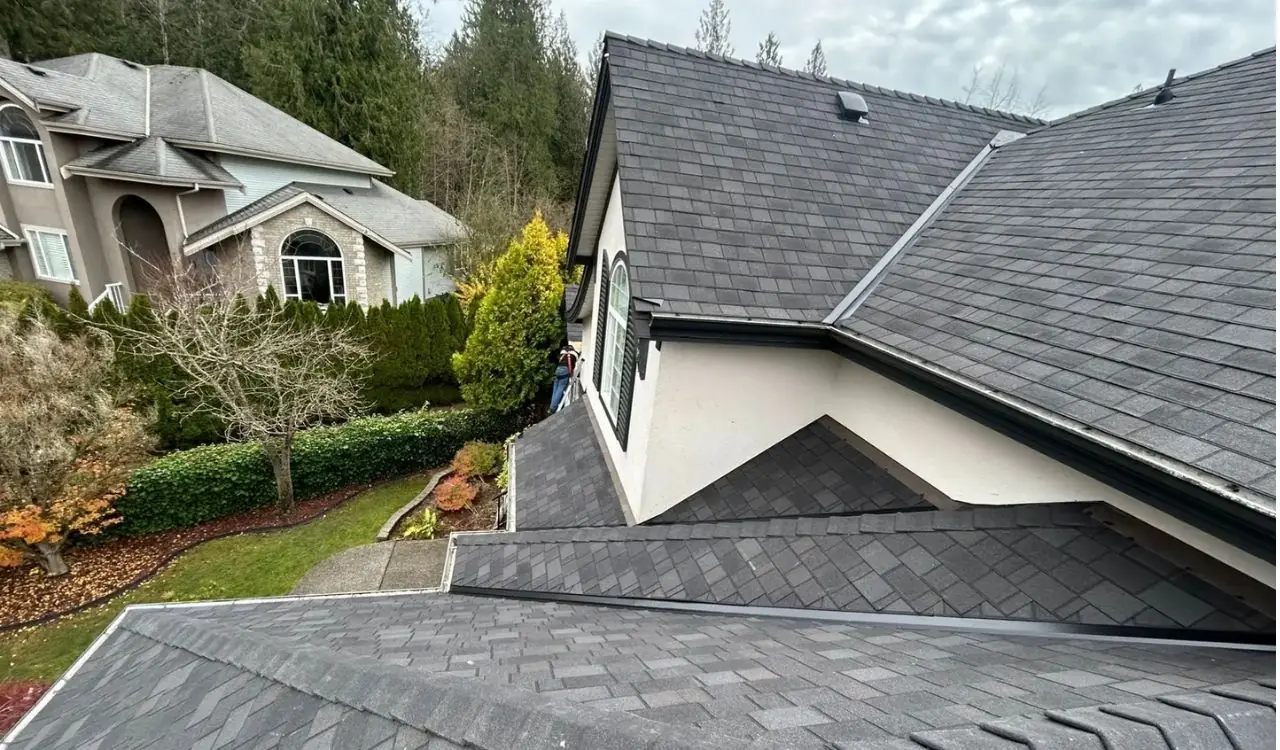
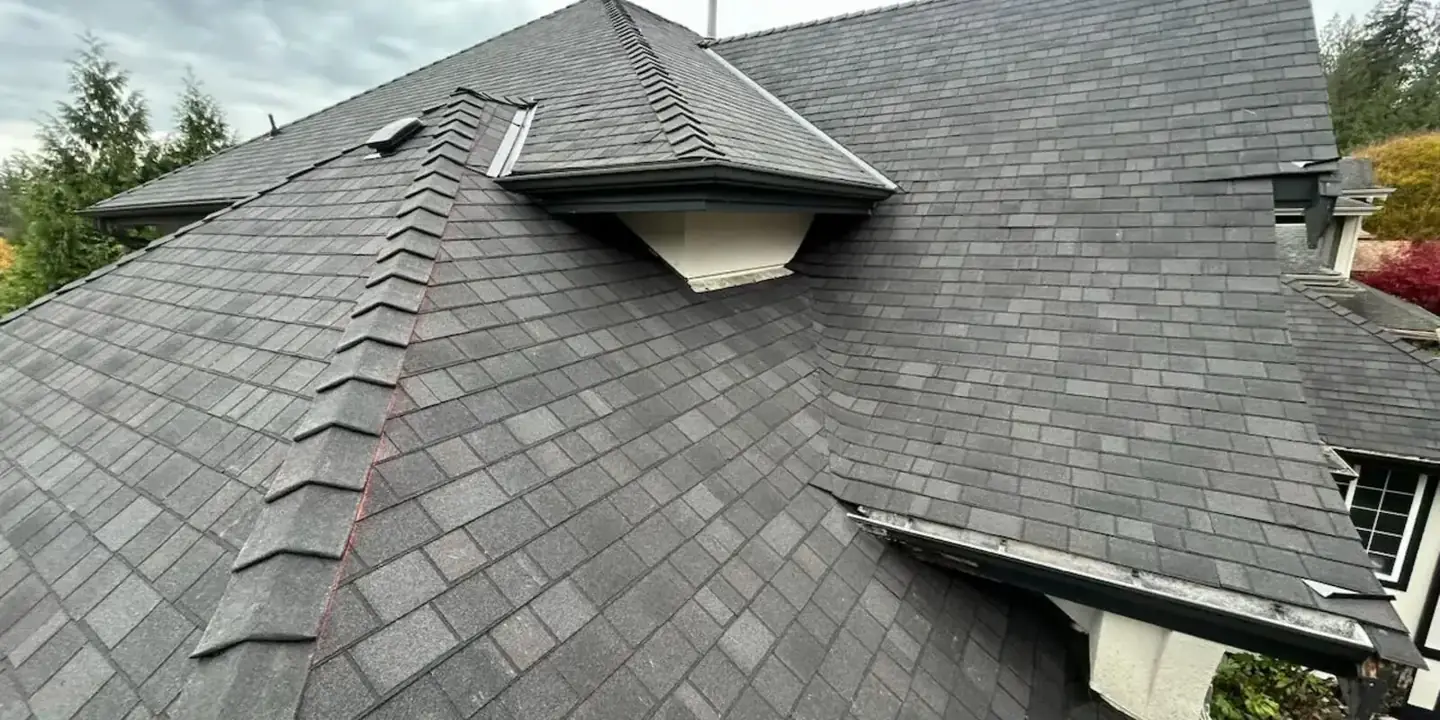
- Look for a ridge vent. From the ground, look along the peak for a continuous low vent running the length of the ridge. If there is no ridge vent and no box or turbine vents either, the attic may have no exhaust at all.
- Step into the attic and look up. You should be able to see daylight at the eaves where the soffit vents are, and the air should feel like it is moving slightly. If the eaves are dark and the air is still, the intake is blocked, often by insulation pushed against the roof edge.
- Look for damp, stains and mould. Check the underside of the deck, the rafters and the insulation for dark stains, damp patches or mould, and check a day or two after heavy rain: any dampness still there after a dry day means the attic is not drying out between storms. Also check that bathroom and kitchen fans vent outside, not into the attic: a fan dumping steamy air into the attic defeats the whole system.
Stay off the roof itself, and do not walk on the attic insulation or the ceiling below it. If you are unsure what you are looking at, or you found dampness or mould, book a professional inspection rather than guessing. A roofer on the roof can see blocked vents and failed flashing that a ground level look misses.
How Roof Ventilation Is Fixed
The fix depends on what is wrong, and many ventilation problems are simpler than homeowners expect.
- Clearing the soffit vents. Insulation slumped over the eaves is the most common cause of poor intake, and one of the cheapest to fix. Baffles fitted between the rafters hold the insulation back and keep the air path open.
- Adding intake vents. If the soffits are solid or there are too few vents, new vented soffit panels or round soffit vents can be added, without disturbing the roof covering.
- Adding or replacing exhaust vents. A continuous ridge vent is the usual choice on a pitched roof, because it vents evenly along the whole peak. Box vents and turbine vents can work where a ridge vent does not suit the roof.
- Fixing fans that vent into the attic. Bathroom and kitchen fans should always vent outside. Redirecting one that dumps into the attic removes a major source of attic moisture.
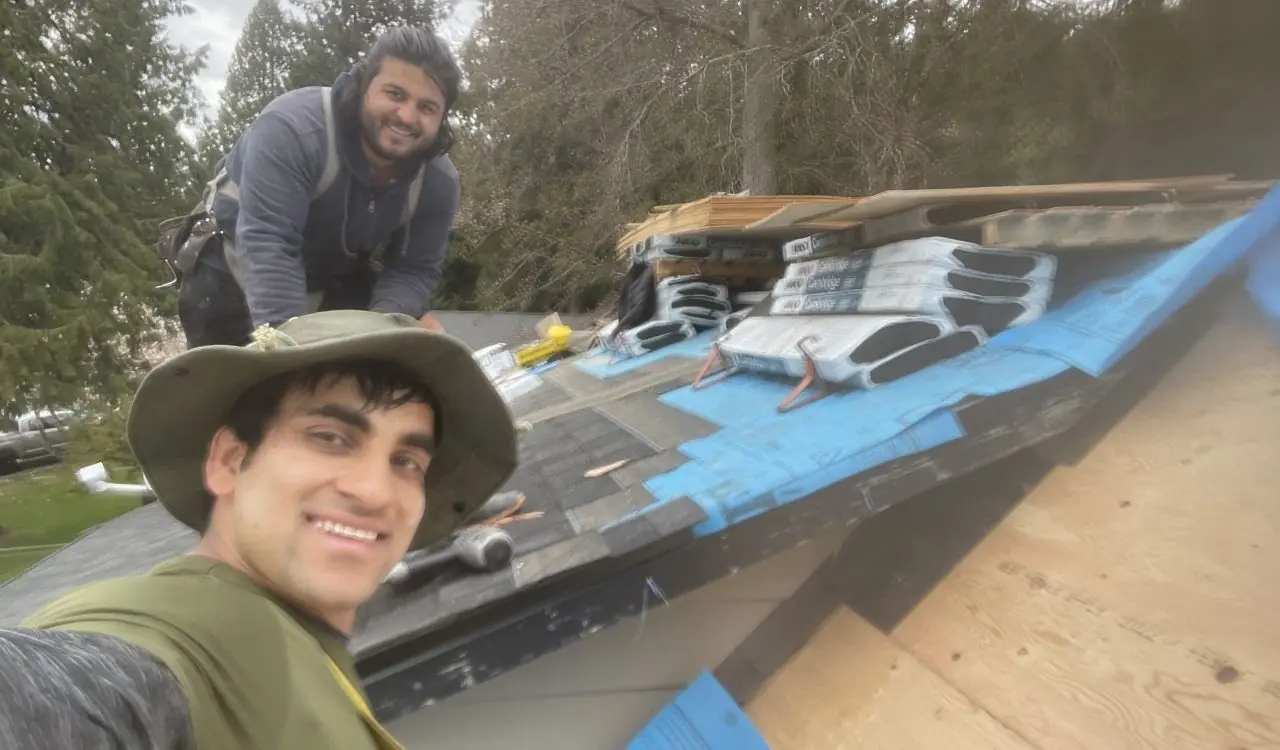
- Fixing ventilation during a reroof. The easiest and cheapest time to fix ventilation properly is when the shingles are off. A ridge vent can be cut in, baffles fitted and soffits opened up as part of the same job, so the new roof starts life with a working system. If your roof is near the end of its life anyway, weigh the repair against a replacement: our Vancouver roof replacement cost guide breaks down typical 2026 ranges by home type. Our step by step roof installation process guide walks through inspection, tear-off, underlayment and the final walkthrough.
What does not work is adding more exhaust vents while the intake stays blocked. Extra vents on the ridge with no air coming in through the soffits will pull conditioned air out of the house instead, which wastes energy and can pull moist indoor air into the attic. Balance is the whole point.
Roof Ventilation and a New Roof: What to Ask Your Roofer
If you are getting quotes for a new roof, ventilation is one of the most useful things to ask about, because it tells you a lot about the contractor. A roofer who talks about airflow before shingle colours understands the system. Ask these questions, and get the answers in writing. Our roof installation service includes a ventilation check on every reroof, and our guide to how to choose a roofing contractor in Vancouver covers the licences, insurance and reviews to check in full.
- Will you assess the ventilation before you quote, and what did you find?
- Is the intake enough for the exhaust you propose, or will you add soffit vents too?
- Will you fit baffles at the eaves so the insulation cannot block the airflow?
- Do the bathroom and kitchen fans vent outside, and will you fix them if they do not?
- Is the ventilation work itemised in the written quote, and is it covered by the workmanship warranty?
A contractor who answers these plainly is one you can trust with the work. One who says ventilation does not matter, or quotes a roof without looking in the attic, is one to think twice about.
The Bottom Line
Roof ventilation is easy to ignore and expensive to neglect. It keeps the attic dry through Vancouver's long wet season, keeps shingles from overheating in summer, and protects the deck and insulation from the slow damage that shortens a roof's life. The warning signs are checkable from the ground or the attic hatch: a stuffy attic, condensation, mould, damp insulation, curling shingles and rusty nails. If you recognise several of them, the airflow is probably wrong, and the fix is usually simpler than the damage it prevents. If your home is anywhere in Vancouver, Surrey, Delta or the wider Lower Mainland, book a free inspection and we will check the vents, the soffits and the attic, and give you a written report and an itemised quote for putting the airflow right.