How long does a roof last in Vancouver? For most homeowners asking the question, the honest answer is that it depends on the material, and on how hard our climate has worked it. A quality architectural shingle roof on the BC coast typically gives 25 to 30 years. A basic three-tab shingle roof gives more like 15 to 20. A metal roof can serve decades longer still. But those are typical lifespans for well installed roofs that get basic care, not promises. This guide explains how long each common roof type lasts in Vancouver, Surrey and the wider Lower Mainland, why our rain and moss climate shortens some roofs faster than others, and what you can do to get the full life out of yours.
Roof Lifespans at a Glance
If you want the quick version first, here are the typical lifespans we see for roofs on the BC coast, assuming professional installation and reasonable maintenance:
- Basic three-tab asphalt shingles: 15 to 20 years.
- Architectural (laminate) asphalt shingles: 25 to 30 years.
- Metal roofing (standing seam or metal shingles): often 40 years or more.
- Cedar shakes and shingles: 20 to 30 years, depending on exposure and treatment.
- Flat and low-slope membranes (torch-on, PVC, TPO): 20 to 25 years.
Notice the range inside every figure. Two identical roofs on the same street can age years apart, because shade, tree cover, ventilation and maintenance decide so much. A south facing slope with full sun can outlast a shaded north slope on the same house by several years. That is why a roof's age alone never settles the replacement question: condition does.
How Long Does a Roof Last by Material?
Material sets the ceiling. Installation, ventilation and maintenance decide how close your roof gets to it. Here is what each common BC roof type realistically delivers on the coast.
Asphalt shingles: 15 to 30 years
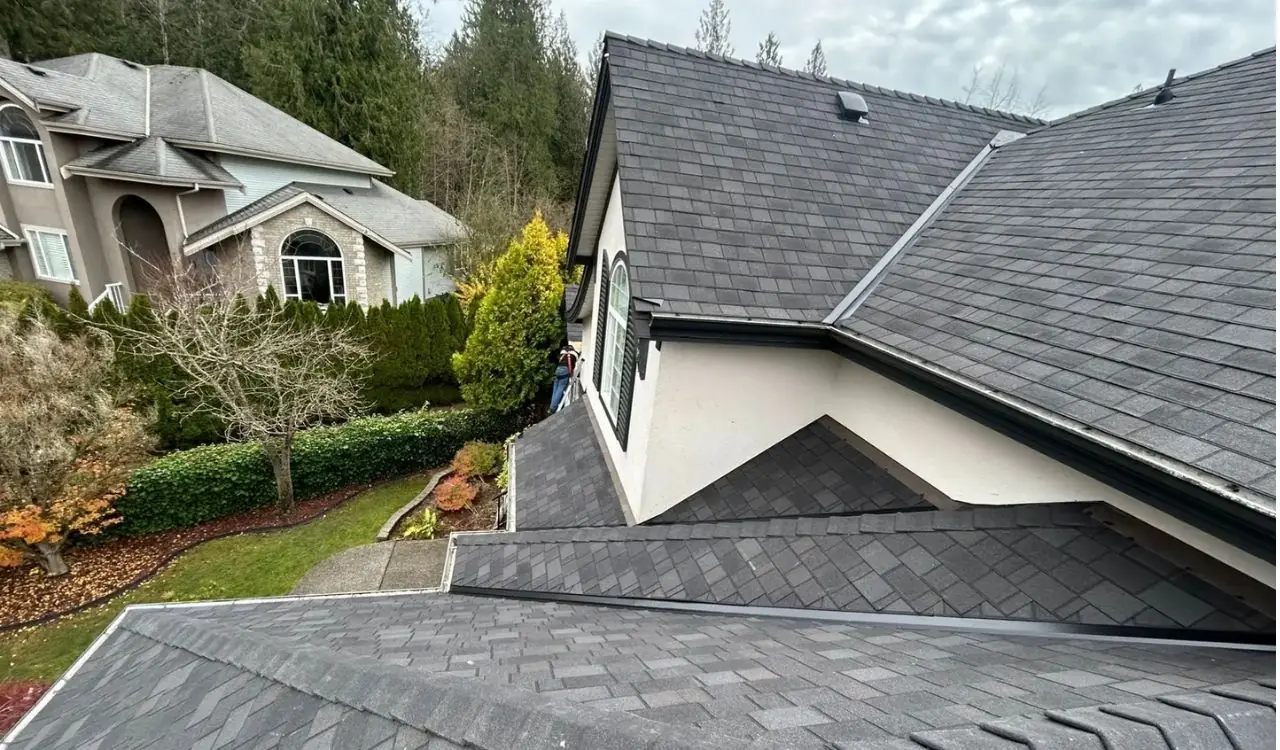
Asphalt shingles cover most Lower Mainland homes, and the gap between the two main types is large. Basic three-tab shingles, the flat single layer style, typically last 15 to 20 years here. Architectural shingles, the thicker two layer style now standard for a reroof, typically last 25 to 30 years. The difference comes down to weight and thickness: architectural shingles carry more asphalt and more granules, so they resist wind uplift and granule loss better, and they cope with our rain better.
What ends a shingle roof on the coast is rarely one dramatic failure. It is slow wear: granules washing off year by year, shingles curling at the edges as they lose flexibility, moss holding moisture against the surface on shaded slopes, and seal strips weakening so wind can lift the courses. Once granule loss is heavy and curling is widespread, repairs stop buying meaningful time.
Metal roofing: 40 years or more
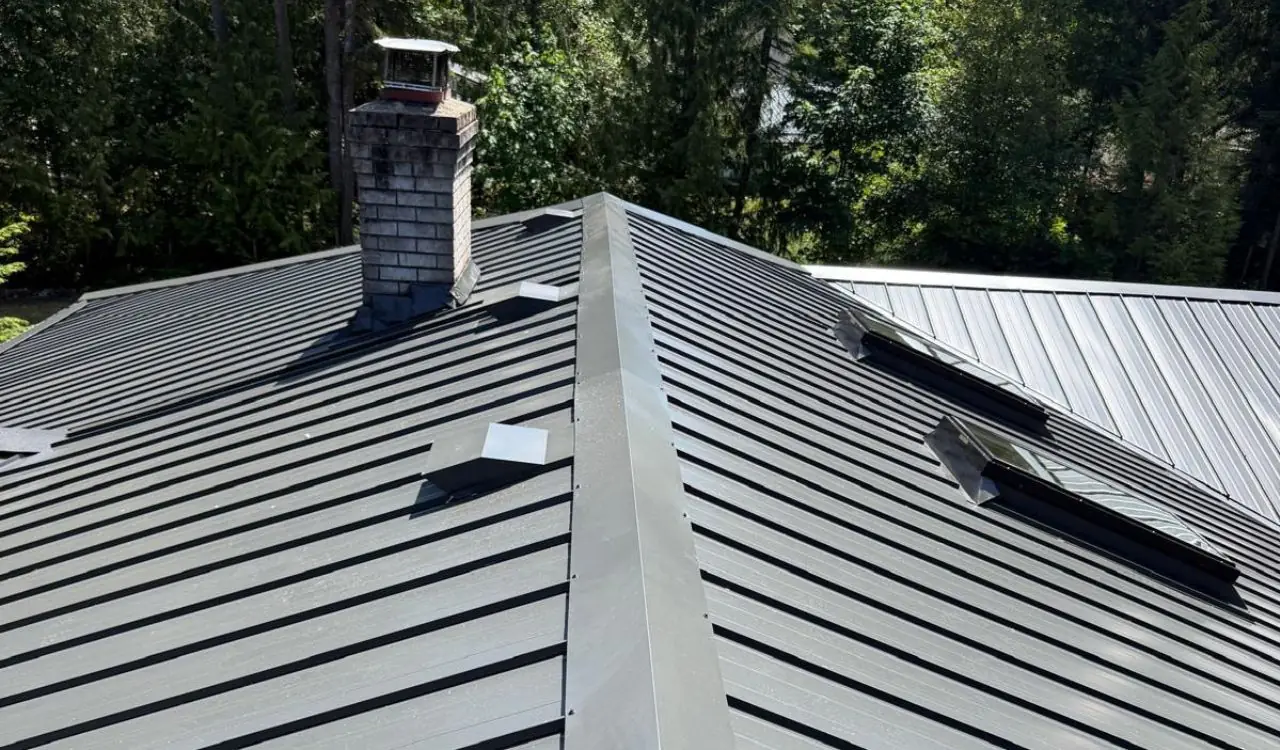
Metal is the longevity leader among pitched roof systems. A standing seam metal roof, or metal shingles, often serves 40 years or more, and it is not unusual for a metal roof to outlast the owners who had it installed. The smooth surface sheds our rain fast, moss struggles to grip it, and there are far fewer joints for wind driven rain to exploit than on a shingle roof. The trade-off is upfront cost and the need for a crew that installs metal often, because the detailing at valleys, chimneys and skylights is where a metal roof succeeds or fails. Our comparison of metal roofing vs shingles in BC covers the full trade-off, including cost, noise and maintenance.
Cedar shakes and shingles: 20 to 30 years
Cedar suits the look of many older Vancouver and North Shore homes, and a well kept cedar roof typically gives 20 to 30 years. Cedar needs more attention than shingles or metal on the coast, though. It is a natural material in a damp climate, so it is vulnerable to moss, algae and rot if it stays wet, and shaded cedar can need treatment and cleaning on a regular cycle. A cedar roof that is cleaned and treated on schedule can reach the top of its range; one that is left alone under trees often does not. Fire treatment requirements and strata rules also apply in some areas, so check before choosing cedar for a reroof.
Flat and low-slope membranes: 20 to 25 years
Flat and low-slope sections cannot use shingles or metal panels, so they rely on membrane systems such as torch-on, PVC or TPO. A well installed membrane typically lasts 20 to 25 years. The weak points are different from a pitched roof: ponding water where drainage is poor, seams that open with age, and punctures from foot traffic or debris. Regular checks of seams, drains and flashing matter more on a flat roof than on a pitched one, because a small seam failure on a flat roof can let water in quietly for months before it shows inside.
Why Vancouver Roofs Age Faster Than Roofs Inland
A roof in Kamloops and a roof in Vancouver can be the same product from the same manufacturer and still live very different lives. Four coastal factors do most of the damage:
- Months of sustained rain. From fall through spring, our roofs are wet more often than they are dry. Water finds every weakness: a small flashing gap that would stay dry in a drier climate becomes an active leak here, and damp shingles age faster than dry ones.
- Moss and algae. Our mild, damp winters are ideal growing conditions. Moss grips the rough granule surface of shingles, especially on shaded north facing slopes under trees, holds moisture against the roof, and lifts shingle edges so wind driven rain can work underneath. Heavy, recurring moss is one of the clearest signs a shingle roof is aging.
- Wind. Winter windstorms lift aging shingles at the edges and drive rain sideways under them. Shingles rely on correct nailing and on sealing strips that have properly bonded, and both weaken with age, which is why so many of our repair calls come after the first big fall storm.
- Freeze-thaw cycles. Water that gets under a shingle or into a small crack expands when it freezes, opening the gap a little wider each cycle. It is a quieter factor than rain or wind, but over twenty winters it adds up.
None of this means a BC coast roof is a bad investment. It means the inspection habit matters more here than in a dry climate: catching wear early is how you get the full 25 to 30 years out of architectural shingles instead of 18.
What Shortens a Roof's Life (and What Does Not)
Beyond material and climate, a handful of factors decide whether your roof reaches the top or the bottom of its expected range:
- Poor ventilation. An attic that cannot breathe cooks shingles from underneath in summer and grows condensation in winter. We regularly see premature aging traced straight back to blocked soffit vents or missing ridge venting. Ventilation is the single most overlooked lifespan factor on the coast.
- Moss left alone. Light moss is cosmetic. Moss that is never cleaned holds moisture against the surface year after year, and that moisture shortens whatever life the roof had left.
- Skipped inspections. Small problems are cheap when they are found early: a lifted flashing, a cracked vent boot, a few damaged shingles. Left alone for two or three winters, the same problems rot sheathing and turn a repair into a replacement.
- Poor installation. Under-nailed shingles, reused flashing, skipped underlayment and bad valley detailing all shorten a roof from day one. A roof installed badly can fail years before its material should.
- Clogged gutters. When gutters overflow, water runs back under the eaves and soaks the fascia and the lowest courses. Cleaning gutters is one of the cheapest things you can do for your roof.
What does not shorten a roof's life as much as people fear: rain noise, foot traffic from an occasional inspection, and normal granule loss in the first year after installation, which is expected while loose granules wash off a new roof.
Signs Your Roof Is Near the End of Its Life
Age is a clue, not a verdict. A 24-year-old architectural shingle roof in good shape may have years left, while a 16-year-old roof under heavy tree cover may be done. Watch for the pattern, not a single sign: curling or cupping shingles across several slopes, heavy granule loss in the gutters, moss that returns within a year or two of cleaning, water stains or daylight in the attic, and flashing that has rusted through or lifted. When two or three of those appear together on a roof past 20 years, replacement is usually the right conversation. Our guide to the signs you need a new roof on the BC coast walks through all seven warning signs in detail, including which ones still mean repair is enough.
How to Make Your Roof Last Longer
You cannot change the climate, but you can change how your roof copes with it. The habits that add years are unglamorous and inexpensive:
- Get a professional inspection every couple of years, and after any major windstorm. A proper inspection covers the shingle or membrane condition on every slope, all flashing details, the attic and ventilation, and the gutters, with photos so you can see what the inspector sees. Our guide to how often to inspect your roof in Metro Vancouver lays out the cadence for coastal homes.
- Treat moss early. Have shaded slopes professionally cleaned and treated before moss takes hold, rather than waiting until it is thick enough to lift shingles. Never pressure wash a shingle roof: the pressure strips granules and shortens the roof it was meant to clean.
- Keep gutters and downspouts clear, especially before the fall rains. Overflowing gutters soak the eaves and the lowest courses of shingles.
- Trim overhanging branches. Branches drop debris, shade the roof so it stays damp, and give moss a head start. A little more sun on a shaded slope makes a real difference.
- Fix small problems fast. A lifted flashing or a handful of wind damaged shingles is a small repair today and a sheathing repair next winter. The cheapest roof work is the work done early.
- Check the ventilation. If your attic is stifling in summer or shows condensation in winter, ask a roofer to check the soffit and ridge venting. Good airflow protects the roof from underneath.
Repair or Replace When the Roof Is Near the End
Knowing how long a roof lasts is only half the decision. The other half is what to do when yours is near the end. The test we use is simple. If fixing the specific problem gives you many more years of service from a roof with plenty of life left, repair it. If the repair is just the first of several you can already see coming, put that money toward the replacement instead. Money spent repairing a 24-year-old roof is money you will spend again on the replacement, and a reroof is also the only time every flashing gets done properly at once. If replacement is the recommendation, our Vancouver roof replacement cost guide breaks down typical 2026 ranges by home type so you can plan with real numbers, and a written, itemised quote for your own roof is the only figure worth deciding on.
The Bottom Line
How long does a roof last in Vancouver? For most homes, a quality architectural shingle roof gives 25 to 30 years, a basic three-tab roof gives 15 to 20, a metal roof often gives 40 or more, and cedar and flat membranes sit in the 20 to 30 year range. But your roof's real lifespan is set by shade, moss, ventilation and maintenance as much as by the material on the box, and the roofs that last longest on the coast are the ones that get looked at: inspected every couple of years, cleaned before moss takes hold, and repaired while the problems are still small. If your roof is past 20 years, or you are seeing two or more of the warning signs above, the next step is not a guess. It is a look. Book a free inspection and we will photograph your roof, tell you honestly how much life it has left, and quote the repair or the replacement in writing, so you can plan on your own timeline.