3 months ago
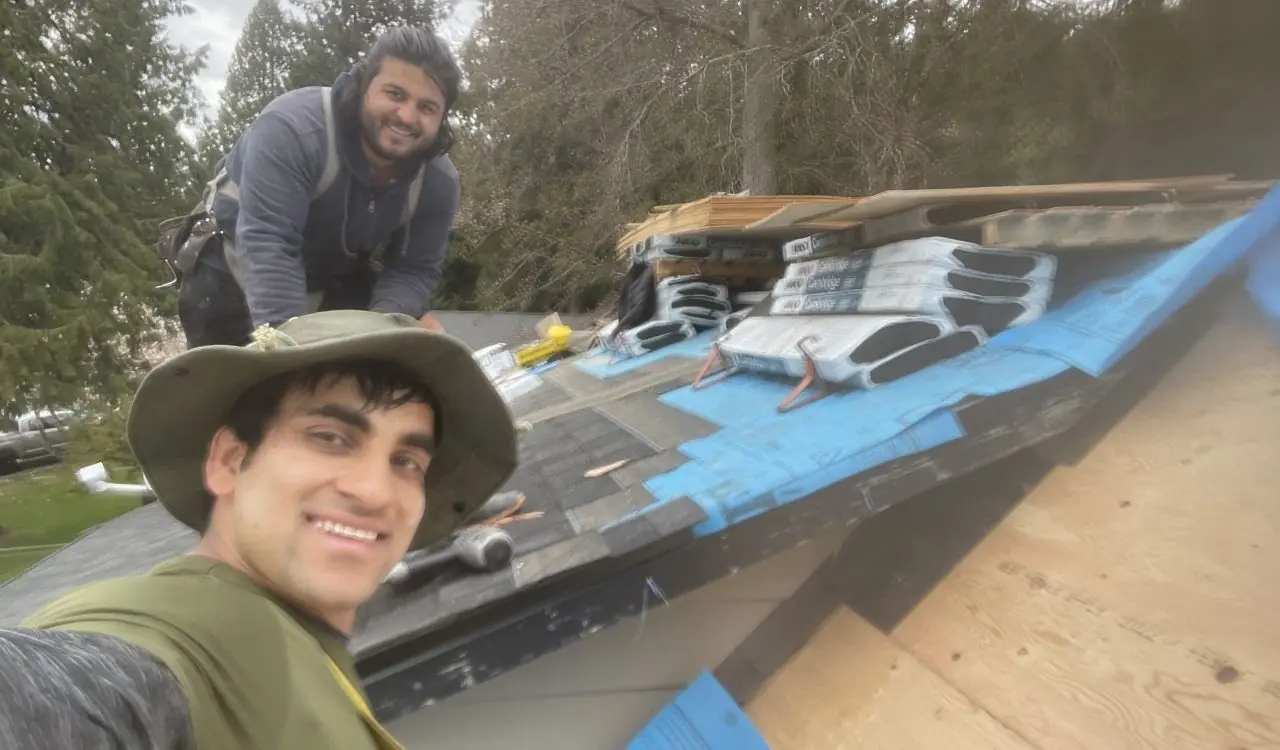
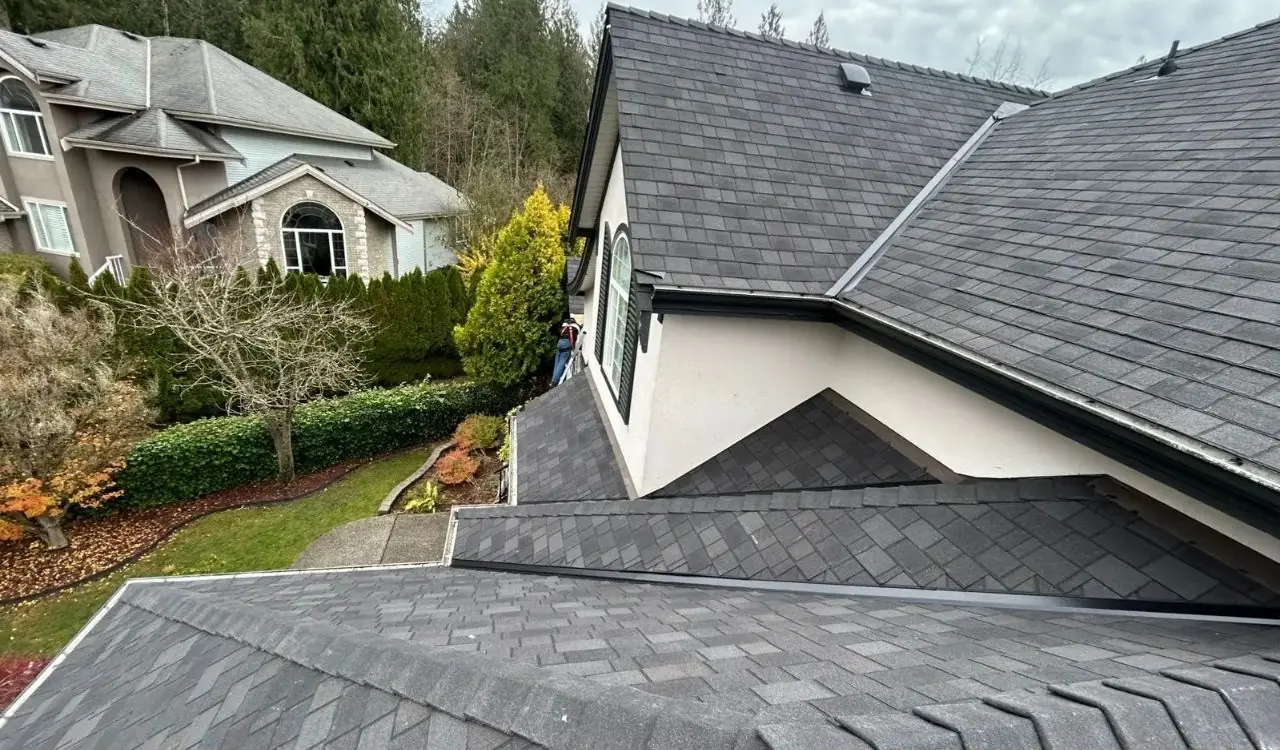
I had a great experience with Scarlet Roofing. Their team was extremely knowledgeable, professional, and easy to work with from start to finish. They took the time to answer my questions, explain the work being done,…
Most roof failures start quietly: a shingle lifted by a winter windstorm, a pipe boot seal cracked by summer sun, a valley slowly filling with fir needles, moss holding moisture against the surface. Caught early, each of these is a quick and affordable fix. Left alone through a Lower Mainland winter, the same small issue becomes interior water damage, rotted decking and eventually a full replacement.
That is the whole philosophy behind our repair and maintenance work. We find the real source of the problem, fix it properly, and tell you honestly what can wait and what cannot. Active leaks get priority scheduling, and most repairs are completed on the same visit.
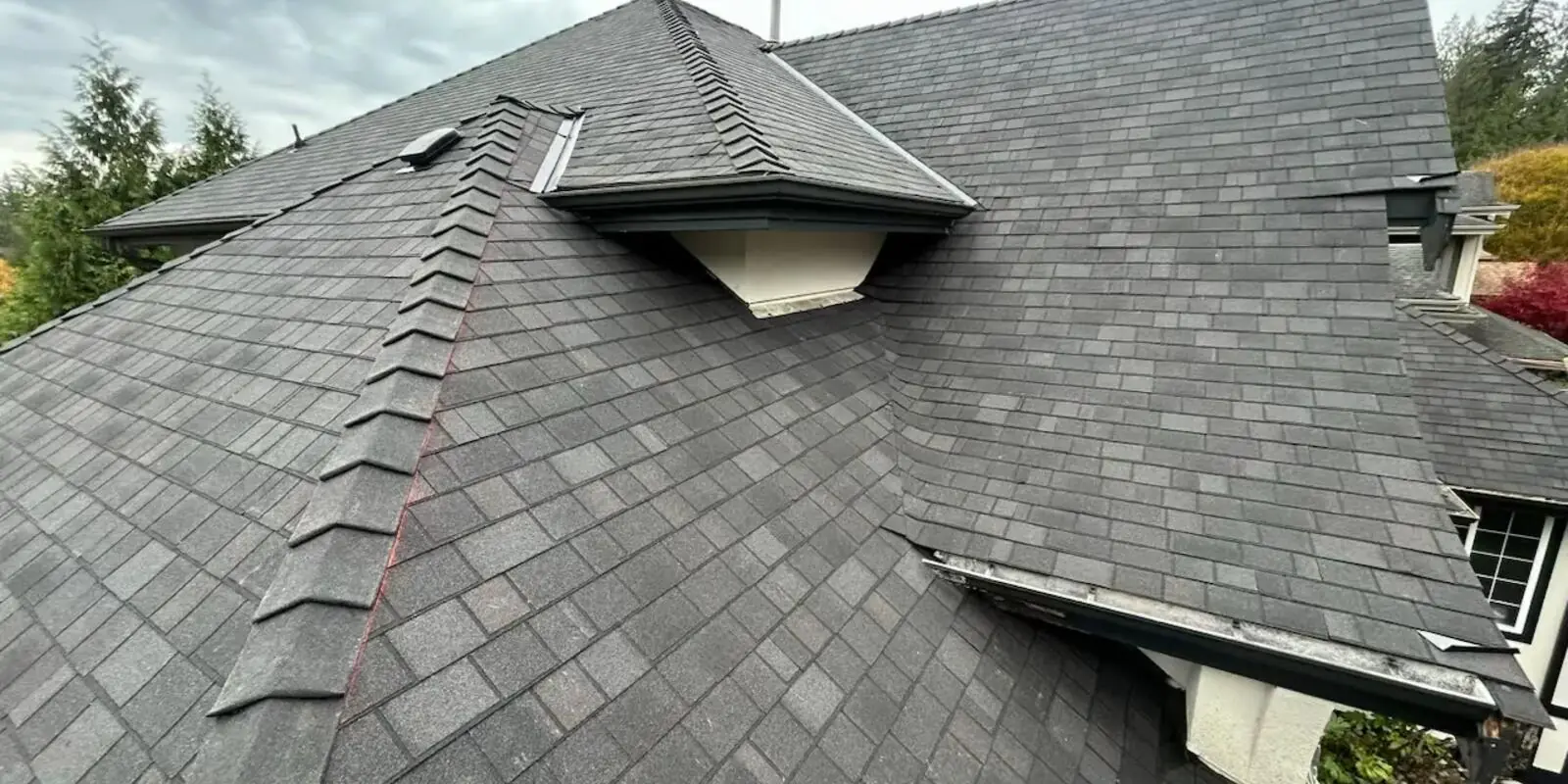
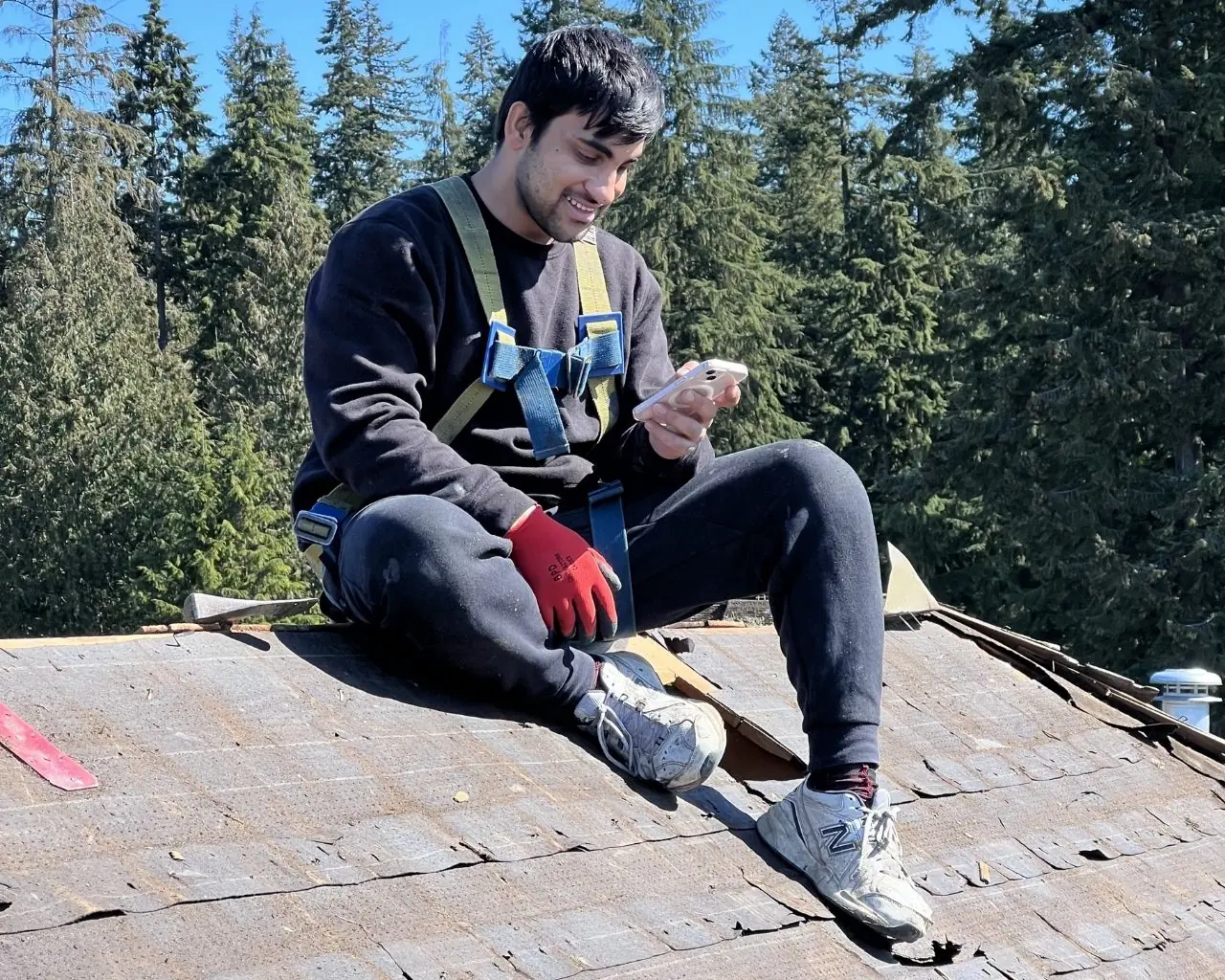
Coastal weather creates a familiar set of failures. Here is what we see most.
First, do not panic. A leak feels like an emergency, and for your ceilings it is, but the situation is almost always manageable if you act calmly.
Buckets under drips, move furniture and valuables out of the way. If a ceiling bulges with trapped water, call us before touching it: a controlled release beats a collapse.
Photograph the interior damage and, if you can do it safely, the roof area. Dated photos help enormously if an insurance claim follows.
Active leaks go to the front of our schedule. We will talk you through immediate steps on the phone and book the earliest visit.
If the weather will not allow a permanent repair that day, we make the roof watertight temporarily and return to complete the repair properly. A tarp slapped down in a storm is not a repair; our temporary work is done to hold until we return.
Repair pricing depends on the type of work, roof access and how much detective work the leak requires. These are general market ranges for the Lower Mainland.
| Repair | Typical market range | What drives it |
|---|---|---|
| Minor shingle repair, a few shingles | $300 to $600 | Access, pitch and shingle matching |
| Vent pipe boot replacement | $250 to $500 | Number of penetrations, roof access |
| Chimney or skylight flashing rebuild | $600 to $1,400 | Size and condition of surrounding roofing |
| Valley rebuild, one valley | $800 to $2,000 | Length and debris damage underneath |
| Storm damage repair | $500 to $3,000 | Extent of damage and emergency timing |
| Temporary emergency dry in | $300 to $800 | Weather conditions and roof size |
These ranges are general market guidance for our region, not a quote for your roof. Every repair starts with a proper diagnosis, and your written quote lists exactly what we will do before we start.
Anyone can caulk a stain. Finding the actual entry point takes method, and guessing wrong means the leak returns with the next rain.
We start inside, tracing the water path through the attic. Stains, damp insulation and daylight tell us where to look on the roof.
Shingles, flashings, valleys, penetrations and drainage, checked in sequence. We photograph everything we find.
For tricky leaks we trace uphill from the evidence, because water travels along the deck before it drips.
You get photos and a plain language explanation of the cause, then a quote for the fix. Diagnosis first, always.
Shingles. Individual shingle replacement is straightforward when the surrounding roof is healthy. We match colour and profile as closely as stock allows, weave replacements into the existing courses, and reseal the surrounding tabs. When granule loss is widespread, though, we will say so: patching a roof that is shedding its protective layer everywhere is spending money on a replacement you will need anyway.
Flashing. Flashing is the number one leak source we find, at chimneys, skylights, walls and vents. Proper flashing is layered metal integrated with the shingles and underlayment, not sealant smeared on top. Sealant is a temporary bandage with a short life in our rain; we rebuild flashing properly so the fix lasts. If your skylight is the culprit, our skylight replacement page explains when repair is enough and when the unit itself is done.
Valleys and vents. Valleys take the heaviest water flow on the roof. When the valley metal corrodes or the membrane beneath fails, we rebuild the full valley rather than patching over it. Vent pipe boots are the simplest win in roofing: a cracked rubber collar replaced in under an hour prevents the slow drip that rots decking unnoticed for years.
Our coastal windstorms, usually November through February, keep us busy. Shingles lift and crease, ridge caps blow off, branches strike roofs and gutters. After any major storm we prioritize damage calls and document everything with dated photos.
On insurance, here is the honest picture. Standard home policies cover sudden and accidental damage: a windstorm tearing off shingles, a branch striking the roof. They do not cover wear, age or maintenance issues, and adjusters are good at telling the difference. If your damage qualifies, we provide the written report with causation and photos that adjusters need, and we can talk you through the claim process. If it does not qualify, we will tell you that too, before you spend time filing.
The cheapest roof work is the work that prevents bigger work. Our annual maintenance plan is one scheduled visit each year, ideally in fall before the rains settle in, that keeps small issues from becoming expensive ones.
The same diagnostic eye as a repair call, across the whole roof, inside and out.
Resealing exposed fasteners, replacing a handful of damaged shingles, clearing valleys before they clog.
Gentle treatment and clearing, never pressure washing, which strips granules and damages shingles.
We confirm water is leaving the roof properly, coordinating with our gutter team if anything needs attention.
Photos and plain language notes, so you always know exactly where your roof stands.
Plan members jump the queue when something urgent comes up. We look after the roof; you stop thinking about it.
Moss is the quiet roof killer in the Lower Mainland. It holds moisture against the shingle surface around the clock, and in freeze thaw cycles that moisture works granules loose and lifts edges. A mossy north slope can take years off a roof life.
The fix is gentle treatment and manual clearing, never a pressure washer, which strips granules and can void warranties. For ongoing protection we can install zinc strips near the ridge; rainwater picks up zinc ions that discourage regrowth below. If moss has already taken hold, our moss removal cost guide breaks down what professional treatment runs around here.
We like repairs. They are honest work at a fair price. But there comes a point where repairing stops being good advice, and we will tell you when you reach it.
Our rule of thumb: if a repair costs more than about half of a replacement and the roof is past 20 years, replacement is usually the better value. Other signs include leaks appearing in multiple locations, widespread granule loss, curling or brittle shingles across large areas, two existing layers, or soft decking found during inspection.
When that is the verdict, we explain why in plain language with photos, and our roof replacement page lays out the full process, costs and material options. No pressure, just the honest math.
Most common repairs fall between $300 and $1,500 depending on the type of work and roof access. Flashing rebuilds and valley work run higher. Those are general market ranges for the Lower Mainland; your written quote follows our diagnosis and lists the exact work.
Yes. Active leaks get priority scheduling, usually inspected within 24 to 48 hours, with a temporary watertight fix on the same visit when the weather demands it.
That is the core of what we do. We trace leaks from the attic and the roof surface, document the true entry point with photos, and explain it in plain language before quoting the repair.
For sudden damage like wind torn shingles or a branch strike, usually yes. For wear and age, no. We document causation with photos and a written report, which is what your adjuster needs to see.
Active leaks are prioritized, typically within 24 to 48 hours. Standard repairs are usually booked within the week. Maintenance plan members jump the queue.
If the roof is under about 15 years old and the damage is localized, repair. Past 20 years with multiple leaks or widespread wear, replacement is usually the better value. We give you the honest assessment either way.
Yes. Our repairs carry a written workmanship warranty: if our repair fails because of how we did it, we return and make it right.
Priority scheduling for active leaks. Call now or request a quote.
Real, verified reviews from our Google Business Profile, shown exactly as our customers wrote them.