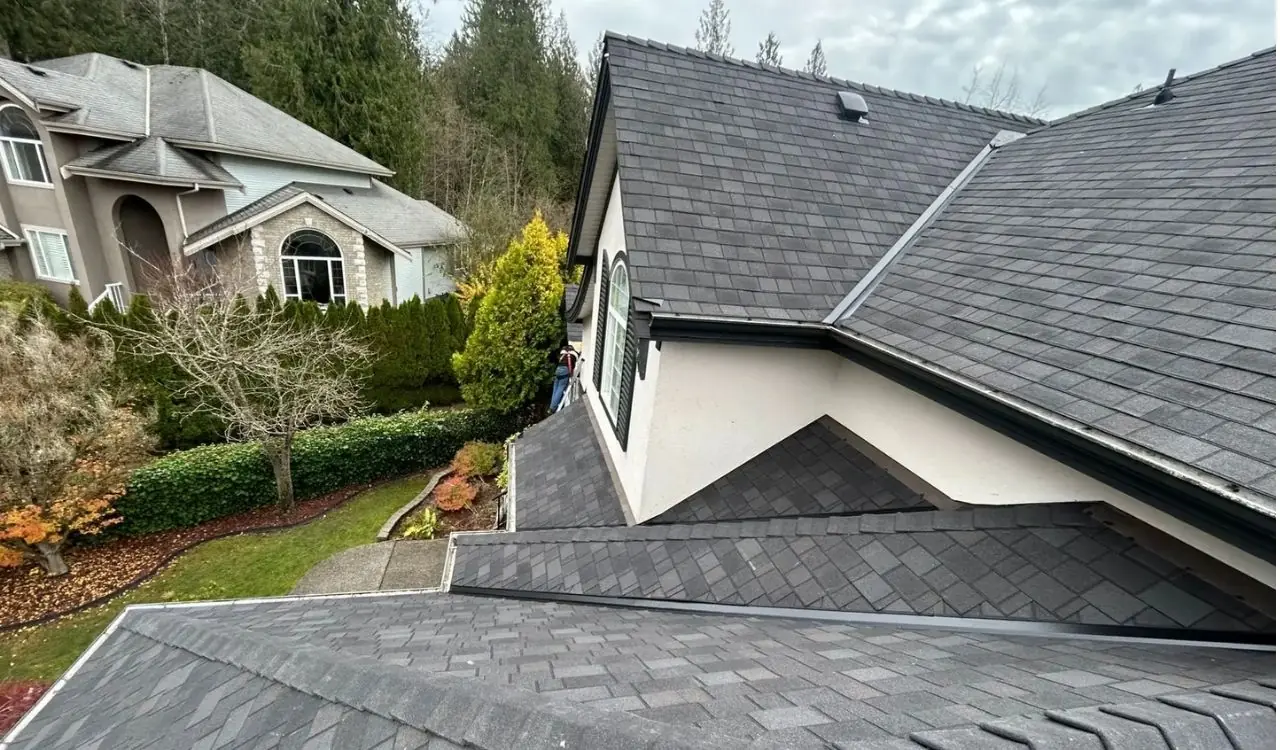
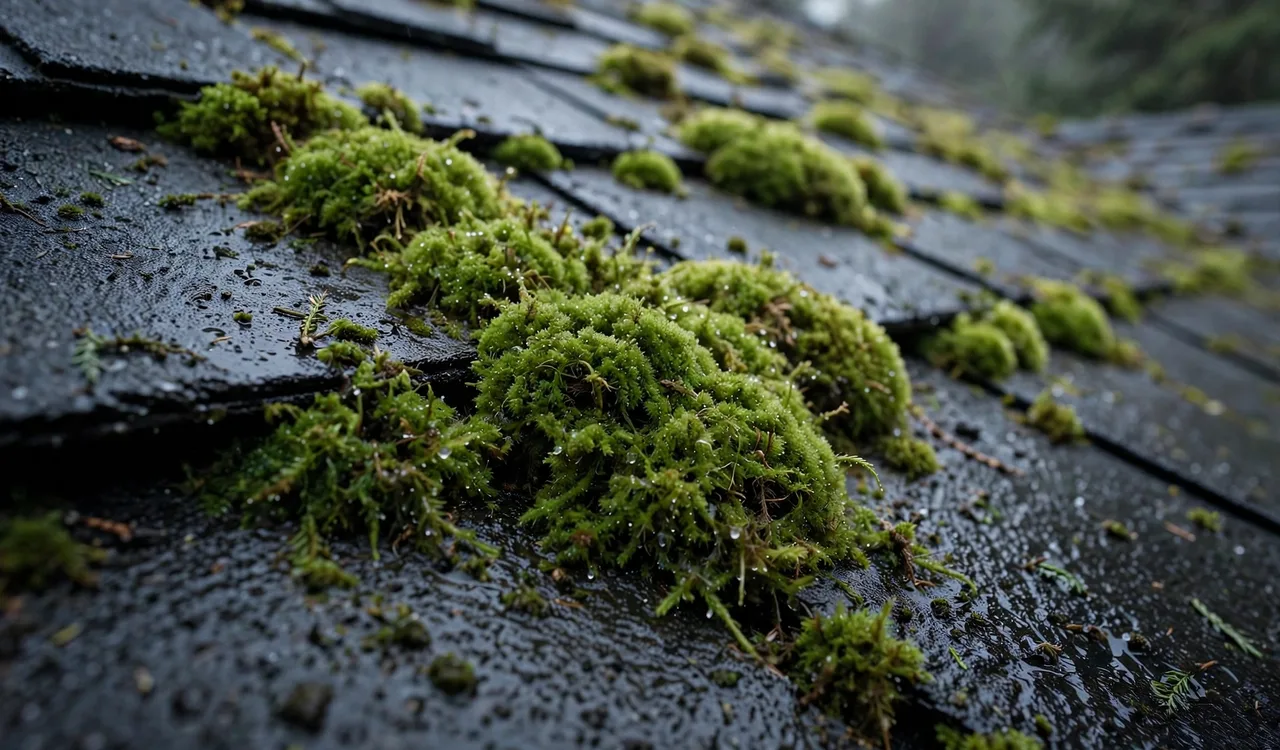
If you own a home in Surrey, Vancouver or anywhere else in the Lower Mainland, you have probably watched moss creep across your shingles. Our long wet winters, heavy tree cover and shaded north-facing slopes make coastal BC one of the mossiest places in Canada to own a roof. It starts as a harmless looking green tint. Left alone for a few seasons, it becomes thick spongy mats that quietly shorten the life of your roof.
So what does it cost to deal with? For most single-family homes in Surrey and Vancouver, professional roof moss removal and treatment falls between $400 and $900. Larger homes, steeper pitches and heavy infestations push that range higher, while a simple preventative treatment on a roof that is still in good shape costs less. Here is how the pricing works, what drives it, and how to avoid paying for it twice.
Why Moss Is More Than a Cosmetic Problem
Moss does its damage slowly, which is exactly why homeowners underestimate it. Each plant anchors itself with root-like structures that work their way under shingle edges. In our climate the moss then stays damp for months at a time, and that constant moisture is what causes the real harm:
- Lifted and curled shingles: moss growing between shingle courses pries the tabs upward, breaking the seal and letting wind-driven rain underneath.
- Granule loss: the root-like anchors and the freeze-thaw cycle loosen the protective granules on asphalt shingles, which speeds up UV aging.
- Trapped moisture: a thick moss mat holds water against the roof surface long after the rain stops, and that is an invitation for rot in the sheathing below.
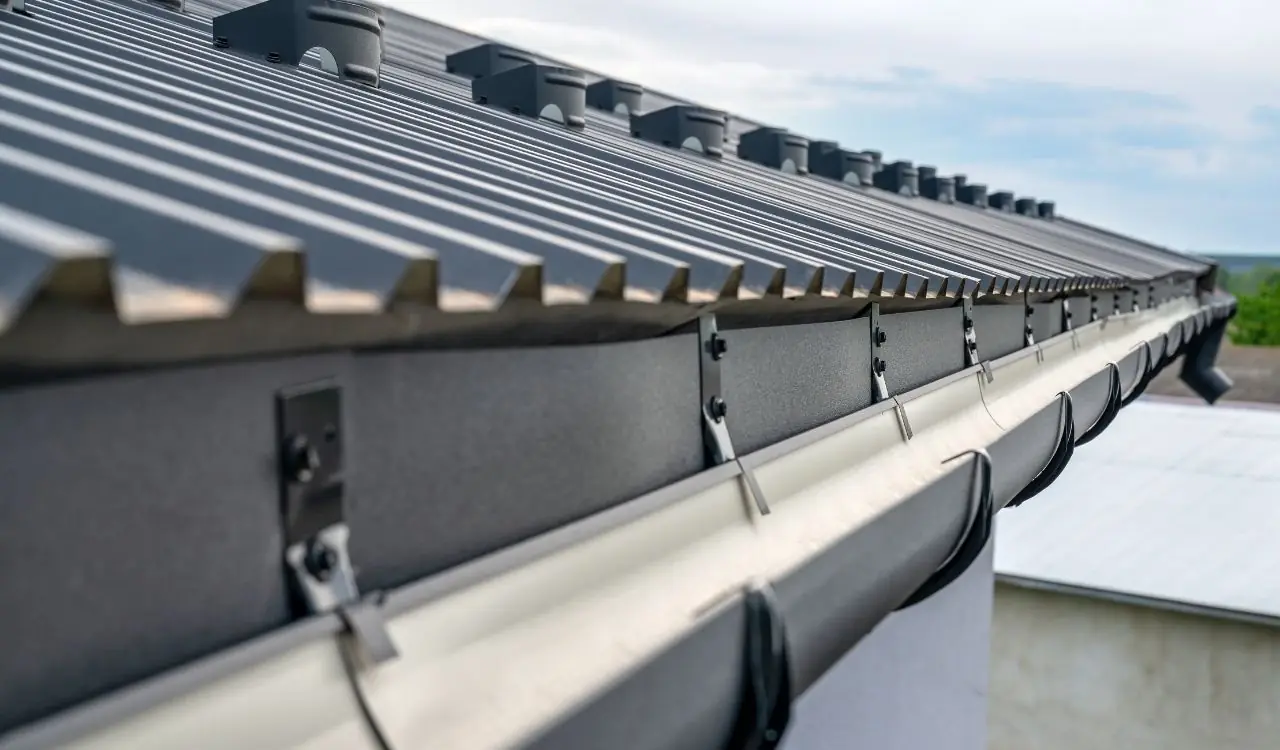
- Blocked drainage: moss debris washes into eavestroughs and downspouts, where it compacts into the kind of dam that causes overflow and fascia damage.
A roof that might have lasted 25 to 30 years can need replacing years earlier when moss is ignored. That is the expensive version of this problem, and it is the one we see most often on homes that skipped treatment for five or six years.
What Roof Moss Removal Typically Costs in the Lower Mainland
Pricing is usually quoted per job rather than per square foot, since access and severity matter as much as size. These are typical 2026 market ranges we see across Surrey, Vancouver and the surrounding cities:
| Method | Typical market range | Best for |
|---|---|---|
| Manual removal plus preventative treatment | $400 to $900 | Standard single-family homes with moderate growth |
| Soft wash treatment | $600 to $1,200 | Heavy staining and algae alongside moss, delicate or aging shingles |
| Full restoration, thick mats and multiple visits | $900 to $1,600 | Roofs neglected for years, deep moss on shaded slopes |
| Standalone zinc based preventative treatment | $250 to $500 | Roofs already cleaned, as ongoing protection |
Most homeowners land in the middle of that table. A straightforward clean and treat on a typical two storey home usually comes in between $500 and $800. If a quote lands far outside these ranges in either direction, ask exactly what is included. The cheapest option is often just a surface scrape with no treatment, and the moss grows straight back within a year.
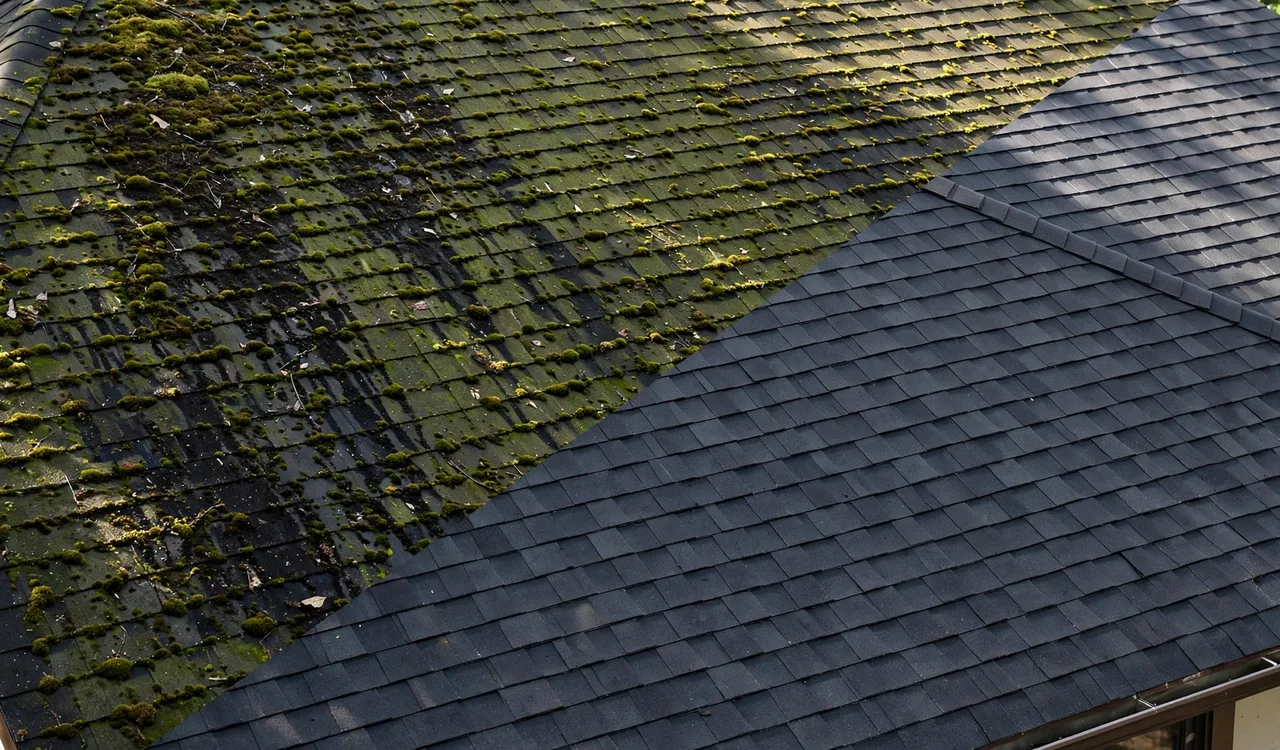
What Moves Your Price Up or Down
- Roof size: more square footage means more labour, more treatment product and more time on the roof.
- Pitch and storeys: steep or three storey roofs need additional safety setup, which adds labour time.
- Severity: a light green film is a half day job. Thick spongy mats that have been building for years take far longer to remove safely.
- Access: tight side yards, delicate landscaping below, or no good ladder placement all slow a crew down.
- Eavestrough cleaning: most companies offer it as an add on, and it makes sense to do both at once since the moss debris ends up in the gutters anyway.
The DIY Mistakes We See Every Spring
Every spring we get calls from homeowners whose do it yourself moss removal made things worse. These are the mistakes worth avoiding:
- Pressure washing: the number one roof killer we see. It strips granules, drives water under shingles and voids warranties. If a contractor suggests it, find another contractor.
- Household bleach: it can discolour shingles and siding, kill landscaping below the eaves, and corrode metal flashing and eavestroughs.
- Scraping with metal tools: wire brushes and scrapers gouge the shingle surface and break the seals between courses.
- Walking a wet mossy roof: moss is slippery, and a fall from a two storey roof is not worth saving a few hundred dollars.
The safe DIY contribution is trimming back overhanging branches to let sunlight reach the roof. Leave the roof surface itself to a crew with the right products and fall protection.
Start With an Inspection, Not a Pressure Washer
A quick inspection tells you whether you are dealing with surface moss or a roof that is already compromised underneath it. We check how deep the growth goes, whether shingle edges have lifted, and whether the eavestroughs are carrying moss debris that signals a bigger cleanup. That fifteen minute look is what separates a $600 treatment from a surprise $14,000 replacement conversation two years later.
The Prevention Math: Why Regular Treatment Pays
Here is the comparison that matters. A preventative treatment every 2 to 3 years costs a few hundred dollars each time. A full roof replacement brought forward by five years because moss was ignored costs $12,000 to $18,000 or more. Even one avoided early replacement pays for decades of treatments. This is the simplest maintenance math in coastal BC roofing, and it is the reason we recommend treatment on a schedule rather than waiting for the green to come back.
How Often Should You Treat? A Maintenance Schedule
One treatment is not a permanent fix in our climate. How often you need it depends on your roof's situation:
- Heavily shaded or tree covered roofs: inspect yearly, treat every 2 years. These are the roofs where moss never really stops.
- Typical suburban exposure, some shade: inspect every 2 years, treat every 2 to 3 years or at the first sign of green returning.
- Open, sunny roofs with good airflow: inspect every 2 to 3 years, treat only when growth appears.
Pair the schedule with trimmed branches and clean eavestroughs and most roofs stay moss free between treatments. The homeowners who spend the least on moss over the life of their roof are not the ones who found the cheapest single treatment. They are the ones who never let it build up in the first place.
"Moss is the slowest roof killer we see, and also the cheapest to prevent. A treatment every few years costs a fraction of even a minor reroof."
Scarlet Roofing & Gutters, Project EstimatorWhy October Is the Right Time to Act
Fall is the sweet spot for moss work in the Lower Mainland. The summer growth season is over so you can see the full extent of it, and treating now means the product has time to work before the heavy winter rains arrive. Moss holds water against your shingles all winter long, and that is when the freeze thaw damage happens. Book the treatment in October and your roof goes into the wettest months clean and protected instead of carrying a sponge into every storm.
What a Proper Moss Service Should Include
If you are comparing quotes, make sure each one covers the same work. A complete service includes gentle manual removal of heavy growth (never a pressure washer on asphalt shingles), treatment of the full roof surface, clearing of eavestroughs and downspouts of moss debris, and an honest assessment of any shingle damage found underneath.
A note on pricing: every figure in this article reflects typical 2026 market ranges in the Lower Mainland, not a Scarlet quote. Your exact cost depends on your roof's size, pitch, access and condition, which is why we price every job from a free on site inspection rather than a phone estimate.
Our Recommendation
If your roof is showing green, do not wait for spring. Book an inspection now, get the moss removed and treated before the winter rains, and put yourself on a 2 to 3 year treatment cycle. It is the lowest cost way to protect the most expensive surface on your home. Learn more about our roof repair and maintenance services or book a free roof inspection and we will tell you honestly whether you need a treatment, a repair, or nothing at all.