Built-in gutters don't get much attention until they fail, and by then, the damage is rarely limited to the gutter itself. Because the channel is concealed within the roofline, problems can run hidden for months while water finds its way into framing, walls and the roof deck. In a climate like ours, where the fall and winter months can bring weeks of sustained rain, a built-in gutter system that's quietly failing puts your fascia, walls, foundation and roof deck at risk. Here are the five warning signs we tell homeowners to watch for, and what each one usually means.
1. A Dipping Or Sagging Roofline Above The Channel
This is usually the most visible sign, and one of the most serious. The roofline above a built-in gutter channel should run straight and true. If you notice a dip, sag, or fascia board pulling away along that line, it typically means the supporting framing or fascia board has started to rot from trapped moisture, or the channel structure itself has weakened.
Either way, this is not a cosmetic issue. A sagging channel collects standing water instead of draining it, which adds weight, accelerates the sag, and eventually lets water into the framing and walls below.
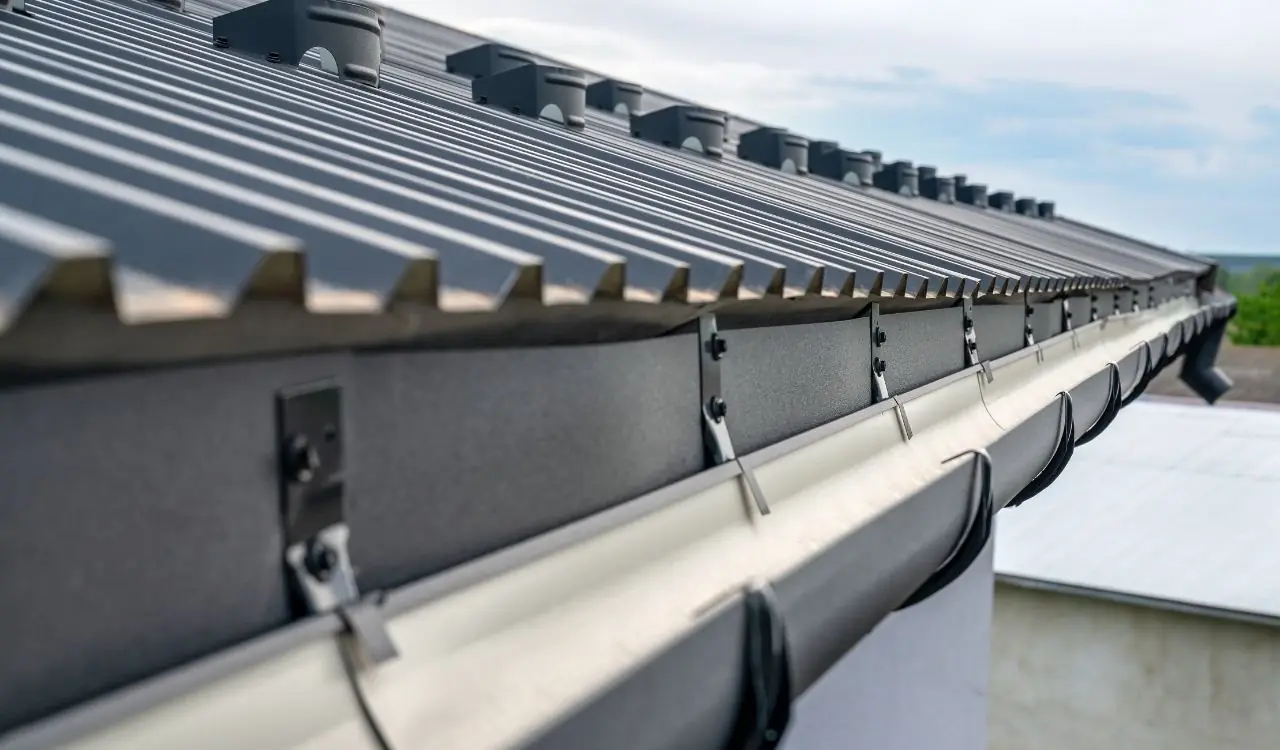
2. Peeling Paint Or Water Stains On Walls Below The Roofline
If you look at the walls below the roofline and notice peeling paint, dark streaking, or a slightly warped look to the fascia and soffit, that is a strong sign water has been escaping the concealed channel or overflowing it for some time. This kind of staining does not usually appear overnight. It is the result of repeated overflow during rain events, often because the channel is blocked, the liner has split, or the slope is wrong.
Left unaddressed, this pattern eventually leads to rot in the fascia and supporting framing, which is a considerably more expensive repair than the gutter work that would have prevented it.
3. Splits In The Liner Or Rust In The Channel
Small splits in a channel liner are easy to miss, because the channel itself is hidden from view, but they tend to widen with every freeze-thaw cycle over the winter. Rust spots on a metal liner are a similar warning sign. Once rust breaks through the surface coating, the metal underneath will continue to deteriorate, and small holes will start to appear at the weak points.
A small split can sometimes be sealed as a temporary fix, but if you are seeing multiple splits or the liner itself is visibly deteriorating, that is usually a sign the channel is near the end of its service life rather than in need of a spot repair.
"By the time a gutter is visibly cracking or rusting through, it's usually already let water past it more than once. We'd rather replace it on our terms in the fall than get an emergency call about a wet basement in January."
Scarlet Roofing & Gutters, Gutter Installation Lead4. Water Overflowing At The Roofline Or Pooling Near The Foundation
Built-in gutters exist to move water away from your home, not just off the roof. If you notice water sheeting over the roof edge during rain, or pooling, erosion, or consistently soggy ground right along your foundation line after a rain event, it is worth checking whether the channel and downspouts are actually doing their job, either because the channel is blocked or overflowing before reaching the downspout, or because the downspout extensions are too short or missing entirely.
This is one of the more overlooked signs, because the problem looks like a landscaping or grading issue when the root cause is actually above, at the roofline.
5. Repeated Blockages In A Channel You Cannot See
Every gutter channel needs occasional debris removal, especially under overhanging trees. But if overflow keeps happening in the same stretches, or the channel needs clearing repeatedly within a single season, that is often a sign of a slope, sizing or liner problem rather than just seasonal debris. Because you cannot see inside a built-in channel, a blockage can sit unnoticed until water shows up somewhere it should not be.
Why Built-In Gutter Problems Stay Hidden Longer
Unlike a hung gutter, a built-in channel sits concealed behind the fascia and inside the roofline, so you cannot watch it fill, sag, or fail. The first signs are usually secondary: staining on a wall, damp in an upper room, or water sheeting over the roof edge during a storm. By the time those signs appear, water has often already reached the framing.
That is why a proper diagnosis with photos matters before anyone recommends a fix. A rebuilt channel should also be set up so a future blockage causes a visible overflow, not a ceiling leak, giving you a warning you can actually see.
Repair Or Replace?
A single split liner or one soft section can often be repaired. Multiple signs at once, like staining, overflow, liner splits and repeated blockages together, usually mean the whole channel has reached the end of its useful life, and patch repairs will end up costing more over time than a full rebuild.
When To Call For An Assessment
If you're noticing even one or two of these signs, it's worth having a professional take a look before the fall rains really pick up. Our crews handle built-in gutter diagnosis, liner replacement and full structural rebuilds across Coquitlam, Vancouver, Surrey and the rest of the Lower Mainland, and we're happy to give you an honest read on whether you're looking at a repair or a rebuild. Take a look at our built-in gutter installation service, or get in touch for a free quote.