3 months ago
I had a great experience with Scarlet Roofing. Their team was extremely knowledgeable, professional, and easy to work with from start to finish. They took the time to answer my questions, explain the work being done,…
In the Lower Mainland, waterproofing is not a luxury upgrade. It is the difference between a roof that quietly does its job for decades and one that lets our long rain season work its way into your framing, insulation and drywall. Most of the leak calls we take in Surrey, Vancouver, Richmond and Coquitlam trace back to the same thing: a detail that was never properly waterproofed in the first place. A flat roof with ponding water. A deck membrane that split at the wall. A valley where the underlayment stopped short.
Roof waterproofing, done properly, is a complete system. It is the membrane or coating, yes, but it is also the flashings at every wall and curb, the drainage that moves water off the roof, and the sealed penetrations where vents and pipes pass through. A paint on product over a failing substrate is not waterproofing. It is a short delay before a bigger repair.
This page explains what real waterproofing involves, which systems suit which roofs, what it costs around here, and how we work. We are a licensed, bonded and insured roofing contractor based in Surrey with more than ten years on Lower Mainland roofs, and everything below reflects what we actually see and install.
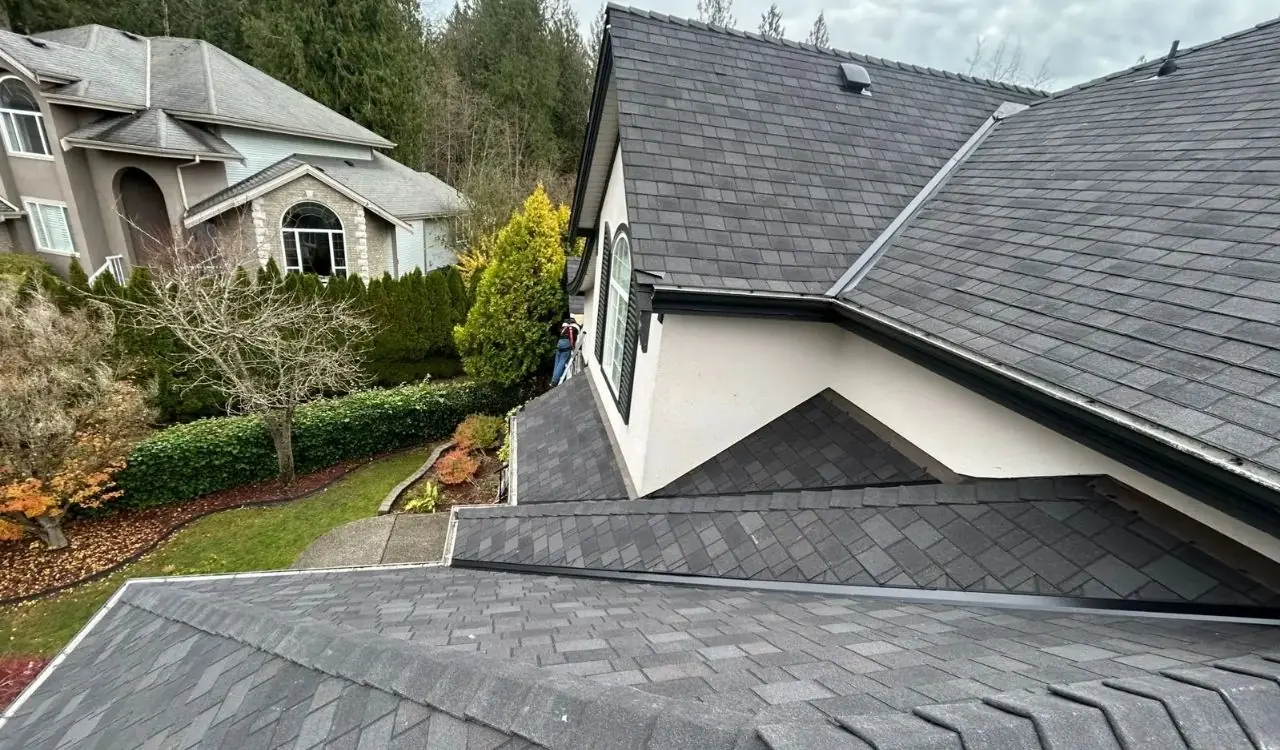
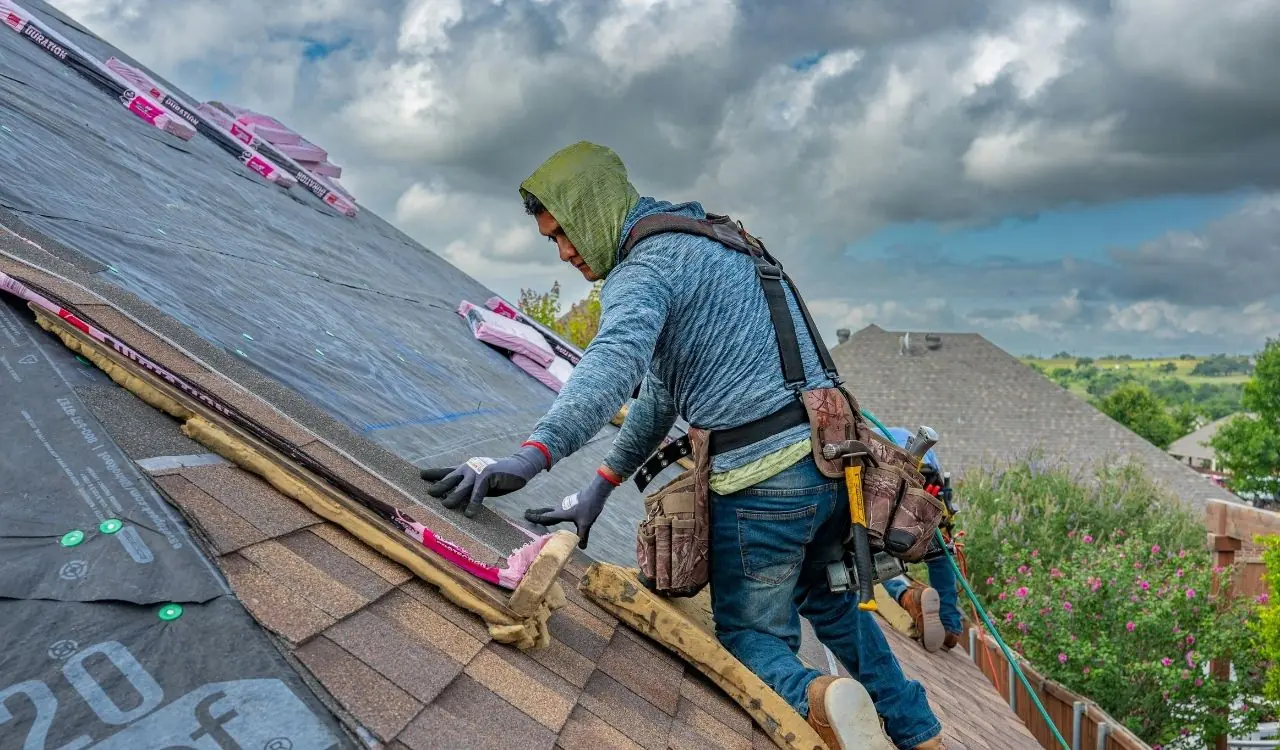
When homeowners hear waterproofing, many picture a thick coating rolled over the roof like paint. Some products work that way, but most lasting waterproofing in our climate is a membrane: a continuous, sealed layer that water simply cannot pass. On low slope and flat roofs that means torch on modified bitumen or self adhered membrane systems. On decks and balconies it means vinyl sheet membranes. At eaves, valleys and penetrations it means ice and water shield integrated with the rest of the system.
What matters more than the product name is continuity. Water is patient. It will find the one unsealed seam, the flashing that stops an inch short, the drain that clogs every fall. A proper waterproofing job treats the roof as one connected system where every edge, corner and penetration is sealed and every drop of water has a clear path off the roof.
That is also why we never waterproof over a mystery. Before any membrane goes down, we investigate: where is water getting in, what condition is the substrate in, and is the drainage working? Waterproofing over rotted decking or a failed slope is money spent twice. How we investigate is covered in its own section below.
There is no single best waterproofing system. The right choice depends on the roof slope, the substrate, foot traffic, budget and how long you plan to own the building. These are the systems we install across the Lower Mainland, and where each one fits.
| System | How it works | Best for | Typical lifespan |
|---|---|---|---|
| Torch on modified bitumen | Two or three plies of bitumen membrane heat welded into one seamless layer, finished with a granulated cap sheet | Flat and low slope roofs on homes, garages and commercial buildings | 20 to 30 years with maintenance |
| Self adhered membrane | Peel and stick modified bitumen that bonds directly to the substrate, with no open flame | Wood frame homes, occupied buildings and anywhere torch work is not practical | 15 to 25 years |
| Liquid applied membrane | Seamless coating built up in layers with reinforcing fabric, curing into a continuous rubber skin | Complex details, parapets, flashings and repairs around penetrations | 10 to 20 years depending on product and exposure |
| Ice and water shield | Self sealing rubberized asphalt membrane | Eaves, valleys, skylight curbs and any leak prone detail on sloped roofs | Lasts the life of the roof system around it |
| Vinyl deck membrane | Heat welded PVC sheet made for walking surfaces | Sundecks, balconies and rooftop patios | 15 to 25 years |
If you are unsure which system suits your roof, that is exactly what the inspection is for. We will tell you which options fit and why, with the tradeoffs stated plainly. If your roof is flat, our torch on and flat roofing page goes deeper on membrane replacement.
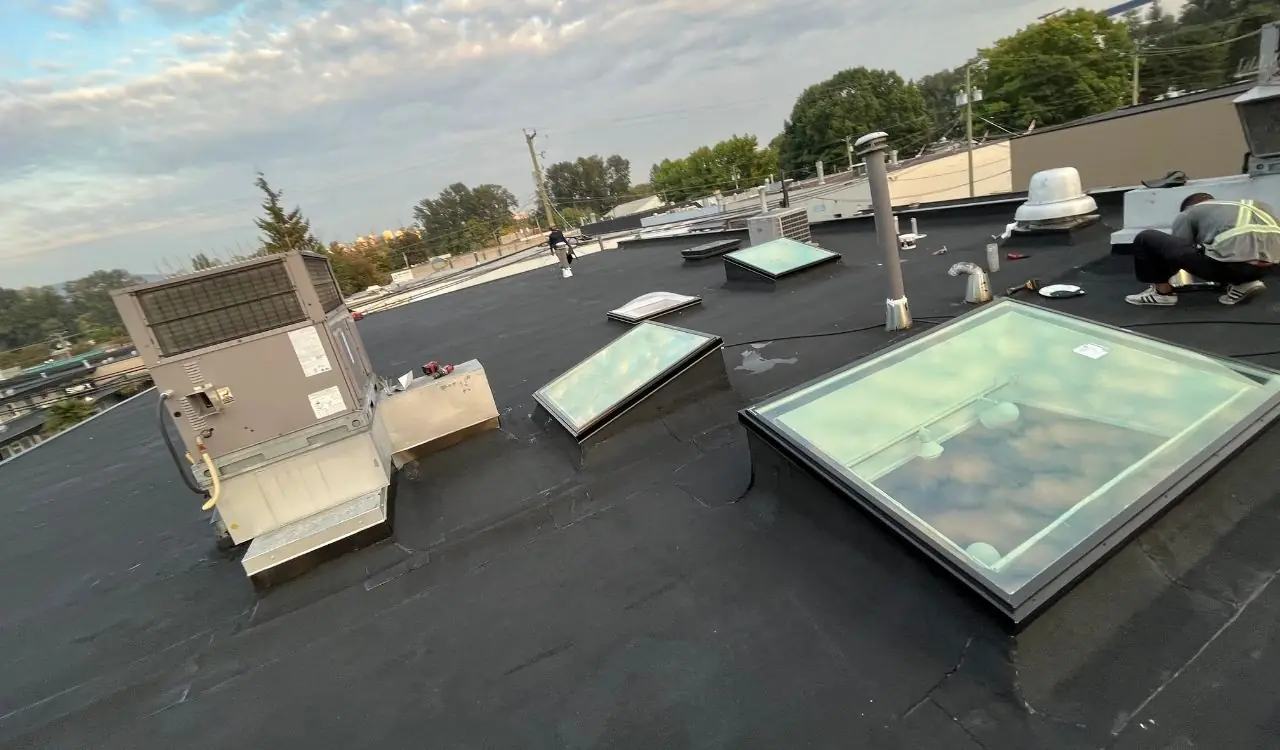
Walk through any Lower Mainland neighbourhood and you will see why deck waterproofing is such a large part of our work. Sundecks over living space are everywhere, and a failed deck membrane does not just stain a ceiling. It rots the framing of the rooms below. We install vinyl sheet membranes that are heat welded at the seams, run up the walls behind the siding, and tie into proper drainage so water leaves instead of pooling.
Flat and low slope roofs need the same thinking. Many were built with barely enough slope to drain, and over the years the structure settles, insulation compresses and low spots form. Standing water is the enemy of every membrane system: it accelerates aging, finds weak seams and in winter it freezes and works into every small opening. Part of our job is drainage correction, adding tapered insulation or adjusting scuppers and drains so water keeps moving.
One honest note: if your flat roof is near the end of its life, waterproofing coatings are rarely the answer. A coating over an aged, brittle membrane buys a little time at best. We will tell you when a full membrane replacement is the better value, and we do that work too.
No waterproofing without diagnosis. That is our rule, because guessing at the source of a leak is how homeowners end up paying for the wrong repair. Water travels. The stain on your ceiling can sit several feet from where the water actually enters, running along framing and decking before it finds a way down.
Our investigation starts inside, in the attic or the ceiling space, tracing the water path back toward its entry point. Then we walk the full roof: membrane condition, seams, flashings at walls and curbs, penetrations, drains and scuppers. On flat roofs we also check for soft spots that signal trapped moisture in the insulation below. If the picture is still unclear, a full roof inspection with moisture readings settles it.
You receive photos of everything we find and a written explanation of what is happening and what will fix it. Sometimes the answer is a targeted repair, not full waterproofing. We will say so. Waterproofing is the right call when the membrane system itself is failing across a wide area, when the substrate is still sound, and when drainage can be made to work.
Waterproofing is usually priced by the square foot because every roof is a different size and condition. The ranges below are general market guidance for the Lower Mainland, not a quote. Your price depends on the system, the substrate condition, access, and how much detail work the flashings and drains need.
| Service | Typical market range | Notes |
|---|---|---|
| Torch on membrane, full replacement | $9 to $14 per square foot installed | Includes removal of the old system where needed |
| Self adhered membrane system | $8 to $12 per square foot installed | Common for residential low slope roofs |
| Liquid applied waterproofing | $6 to $10 per square foot installed | Best for details and smaller areas |
| Vinyl deck membrane | $10 to $16 per square foot installed | Includes wall flashings and drainage details |
| Ice and water shield details | $400 to $1,200 per area | Valleys, eaves and skylight curbs as part of a roofing project |
| Leak investigation and written report | $200 to $400 | Credited toward the work when you proceed with us |
These are market ranges only, and every roof is different. Steep access, multiple layers to remove, rotted decking and complex flashing details all move the number. What we promise is a written itemized quote after a proper inspection, so you see exactly what each part costs, labour and materials broken out, before we start. Nothing here is a binding price.
One more honest point: the cheapest waterproofing quote is rarely the cheapest job. A low number that skips substrate repair or flashing details usually means paying twice. Ask every contractor what is included, and compare itemized quotes line by line.
A full inspection with photos, plus moisture readings on flat roofs to find trapped water in the insulation below.
Which system we recommend, what gets repaired first, and what each part costs. No vague allowances.
Rotted decking replaced, low spots corrected, surfaces cleaned and primed. The membrane is only as good as what it bonds to.
Your chosen system installed to manufacturer specification, with extra care at seams and transitions.
Walls, curbs, parapets, vents and drains sealed and integrated with the field membrane.
Drains and scuppers cleared and tested. Where it makes sense, we hose test the details before we call it done.
You see the finished work, receive photos and care instructions, and warranty documents are registered.
A large share of our waterproofing work is for strata councils and commercial property managers, and the job is different at that scale. The roof is bigger, the stakes are higher, and the work has to happen around tenants, customers and daily operations.
We phase the work so only part of the roof is open at a time and the building stays dry and usable throughout. For occupied buildings we favour self adhered systems where torch work would be disruptive. You receive a documentation package with photos, product data and maintenance requirements, which is what councils need for their records and what keeps warranty coverage valid.
We also set up maintenance plans: scheduled inspections, drain clearing before the fall rains, and minor repairs handled before they grow. For a strata, a maintenance plan is the cheapest insurance a roof can have.
Every waterproofing system we install can reach its full lifespan, but only with basic care. The good news is that the care is simple.
Once a year, the roof should be inspected: seams checked, flashings looked over, drains and scuppers cleared of leaves and debris. In the Lower Mainland, that inspection is best done in early fall, before the heavy rains arrive. Keep foot traffic off membrane roofs except for maintenance, and never let anyone drag equipment across it.
Recoating intervals apply to liquid applied systems, typically every ten years or so depending on the product. And one rule that protects your warranty: call us before anyone else cuts into the membrane for a new vent, a satellite mount or anything similar. Unapproved penetrations are the most common reason warranty claims get denied.
Waterproofing work carries two layers of protection: the manufacturer's warranty on the membrane system and our workmanship warranty on the installation. Manufacturer terms vary by system and usually require that the roof is maintained and that no unapproved changes are made to the membrane.
Our workmanship warranty covers the installation itself: seams, flashings, edge details and the drainage work we performed. If a leak traces back to our work, we come back and make it right. What it does not cover is damage from other trades, new penetrations cut without us, or neglected maintenance. We put all of this in writing before the job starts, in plain language.
As general market guidance, torch on membrane replacement typically runs $9 to $14 per square foot installed, self adhered systems $8 to $12, liquid applied $6 to $10, and vinyl deck membranes $10 to $16. These are market ranges, not a quote. Your written itemized quote from us follows a proper inspection.
Torch on modified bitumen typically lasts 20 to 30 years with maintenance, self adhered membranes 15 to 25 years, liquid applied systems 10 to 20 years, and vinyl deck membranes 15 to 25 years. Annual inspections and clear drains are what get a system to the top of its range.
Only if the substrate is sound. If the decking is solid, the existing membrane is well bonded and drainage works, an overlay or coating can make sense. If there is trapped moisture or rotted decking, waterproofing over it just hides the problem. Our investigation tells us which situation you are in.
Yes. We install vinyl sheet membranes on sundecks, balconies and rooftop patios, with heat welded seams and flashings run up behind the siding. It is one of the most common jobs we do in the Lower Mainland.
We trace it from inside first, checking the attic or ceiling space, then walk the full roof inspecting the membrane, seams, flashings, penetrations and drains. On flat roofs we take moisture readings to find trapped water. You get photos and a written explanation before any work is quoted.
Yes. You get the manufacturer's warranty on the membrane system plus our workmanship warranty on the installation, covering seams, flashings and details we installed. Terms, including the maintenance needed to keep coverage valid, are put in writing before we start.
Yes. We do phased waterproofing for stratas and commercial buildings with documentation packages for council records, and we offer maintenance plans with scheduled inspections and drain clearing.
Get a free inspection and a straight answer on what it needs.
Real, verified reviews from our Google Business Profile, shown exactly as our customers wrote them.