Metal roofing vs shingles is the first decision most BC homeowners face when a reroof comes up, and it is worth deciding before you compare quotes, because the two systems differ in almost every way that matters on the coast: lifespan, rain performance, moss growth, noise, weight and cost. This guide compares metal roofing and asphalt shingles head to head for Vancouver, Surrey and the wider Lower Mainland, where heavy rain, shaded lots and moss growth punish some roofs harder than others. By the end you should know which system suits your home and which questions to ask a roofer.
The Short Answer: Which Roof Wins in BC?
Neither material wins outright, and any roofer who tells you otherwise is selling you their favourite product, not a recommendation for your home. As a rule of thumb, metal roofing usually wins on lifespan and low maintenance, while asphalt shingles usually win on upfront cost and simplicity. If you plan to stay in your home for decades and your budget allows it, metal is often the better long term buy. If you plan to sell within a few years, or the budget for this reroof is fixed, a quality architectural shingle roof, installed well, is usually the smarter spend.
Metal Roofing in BC: Strengths and Trade-Offs
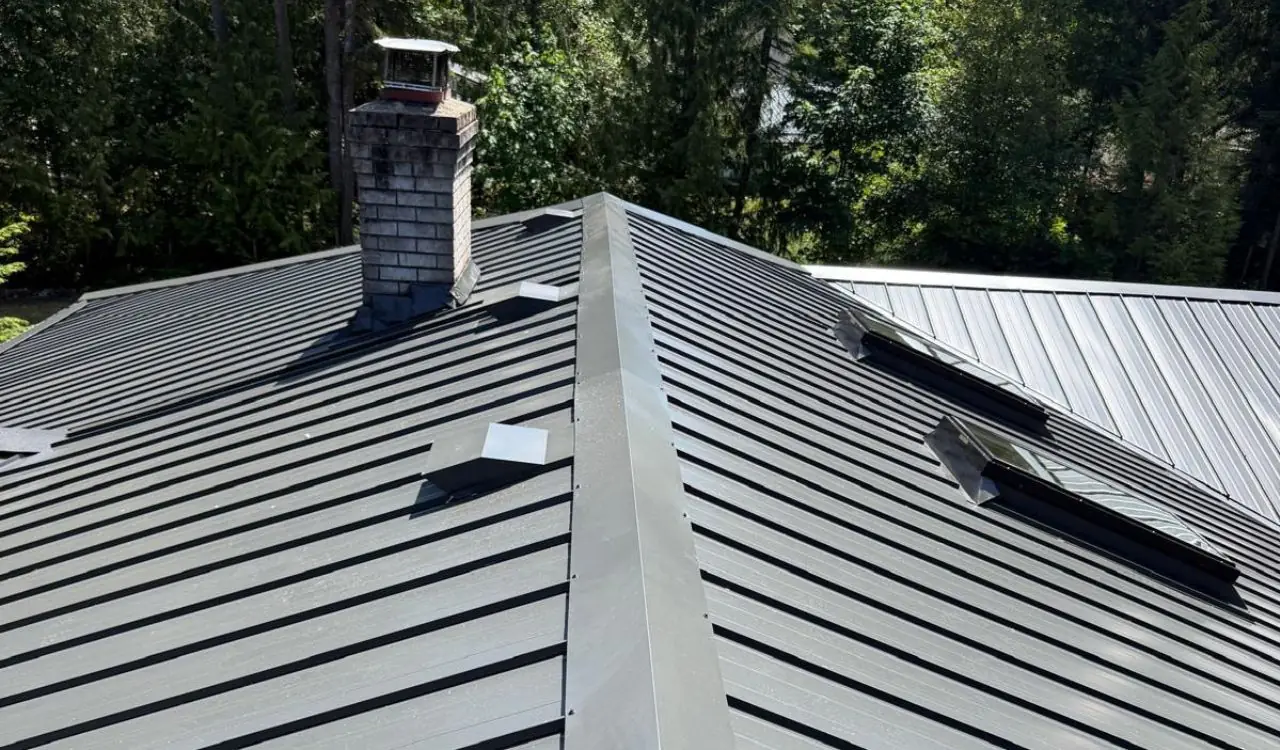
Modern metal roofing is not the corrugated barn roof many people picture. The most common residential choice is standing seam: long panels with raised seams and concealed fasteners. Metal shingles and tiles are another option, made to mimic slate or cedar shake. The usual materials are coated steel, aluminium and zinc, each with a factory applied finish.
On the BC coast, the case for metal starts with water. A smooth metal surface sheds rain and snow fast, and standing seam panels have far fewer joints than a shingle roof, which means fewer places for wind driven rain to find a way in. Moss also struggles to grip a smooth metal surface, a real advantage on shaded North Shore and Vancouver lots where shingle roofs green over within a few seasons. Metal is non-combustible, which matters in wildfire prone interface areas.
The trade-offs are real. Metal costs more upfront than shingles, and it needs a crew that installs it often: the detailing at valleys, chimneys, skylights and penetrations is where metal roofs succeed or fail, and a crew that only does one or two a year is a risk. Denting from foot traffic or falling branches is possible, though everyday hail on the coast is rarely a factor. Panels also expand and contract with temperature, so the fastening system has to allow for movement. Our roof installation page explains what a professional installation scope should cover.
Asphalt Shingles in BC: Strengths and Trade-Offs
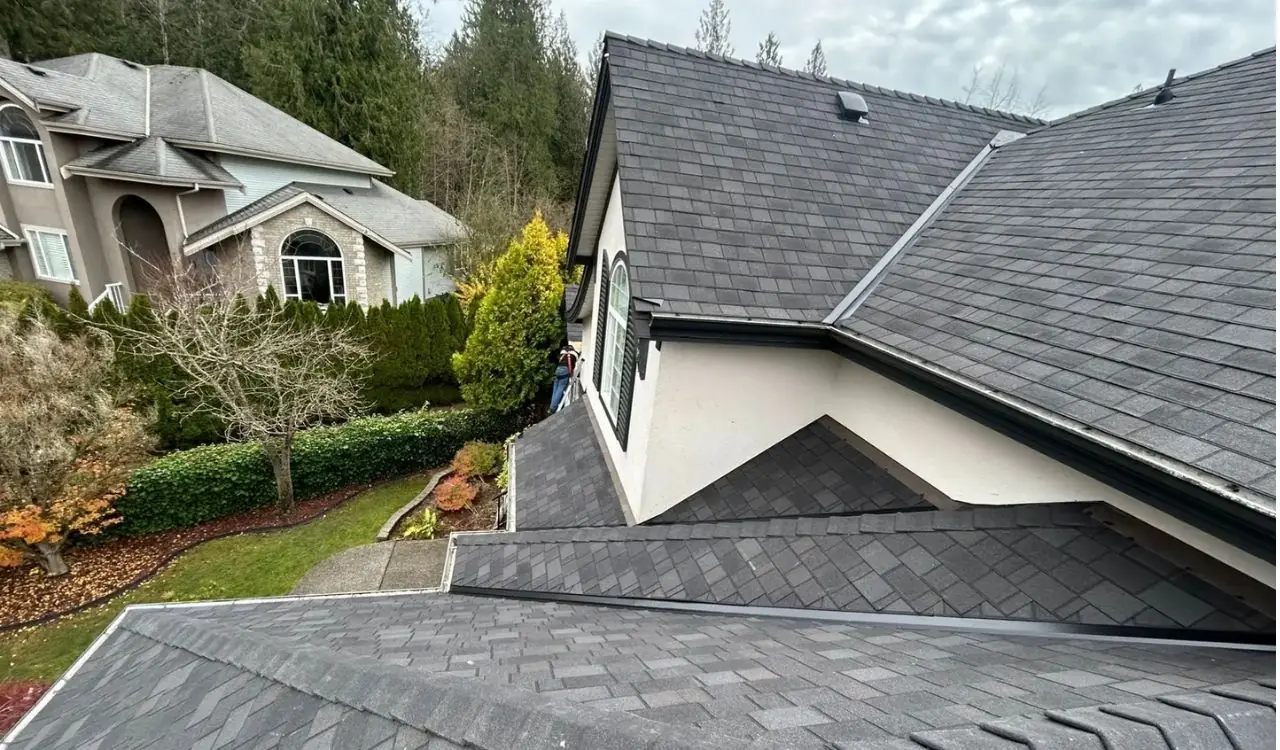
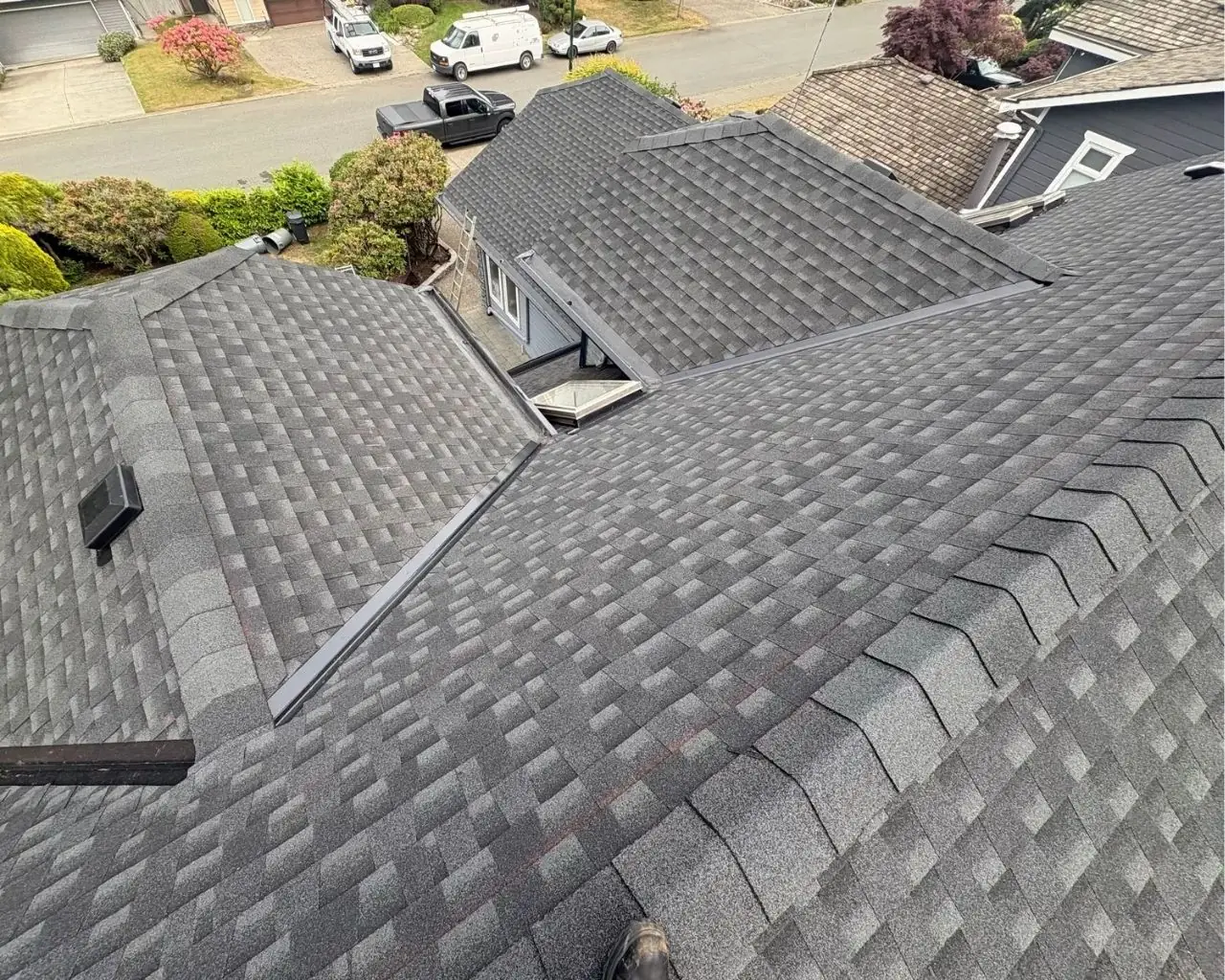
Asphalt shingles are the default roof on most Lower Mainland homes for good reason. They are a fibreglass mat coated in asphalt and surfaced with ceramic granules. Architectural (also called laminate) shingles, the thicker two layer type, are the standard choice for a reroof today; the older flat three tab style is now mostly used for sheds and outbuildings.
The strengths are practical. Shingles cost less upfront than any other pitched roof system, every local crew installs them regularly, and repairs are simple: a damaged shingle can usually be replaced on its own. They are quiet in rain, they come in a wide range of colours, and they suit complicated roof shapes with dormers, valleys and multiple pitches, where rigid panels need more cutting and detailing.
The trade-offs show up over time, especially on the wet coast. Granules wear off the surface year by year, and once enough are gone the asphalt underneath ages faster. Shaded, damp slopes grow moss and algae, which hold moisture against the shingles and shorten their life if they are never cleaned off. Wind uplift is the other coastal risk: shingles rely on correct nailing and sealing, and a poorly nailed roof can lose shingles in the first serious windstorm. It does mean a shingle roof on the coast needs more attention, and an earlier replacement, than the same roof in a dry climate.
Metal Roofing vs Shingles: The Head-to-Head Comparison
Here is how the two systems compare on the factors that actually decide a reroof in BC.
Upfront cost and lifetime cost
Metal costs more on day one. The lifetime maths, though, can point the other way: a metal roof can outlast two shingle roofs, which means one tear-off and one round of disruption instead of two. Whether that saving is real for you depends on how long you stay. If you sell in five years, you have paid the premium without collecting the benefit, and a quality shingle roof is usually the better value. Ask for both options quoted on the same scope before you decide. Our Vancouver roof replacement cost guide explains what drives a quote in this market.
Lifespan and warranties
As a rough guide, a quality architectural shingle roof on the coast serves roughly two to three decades, depending on the product, the shade and tree cover, and how well it is maintained. A metal roof typically serves decades longer, often for as long as the owners stay in the home. What matters most is the warranty paperwork. Every roof carries two warranties, the manufacturer's warranty on the materials and the contractor's warranty on the workmanship, and the exclusions matter as much as the headline years. Check whether a metal warranty covers coastal exposure, whether it requires installation by a certified crew, and what it says about finish and corrosion.
Rain, leaks and ice
Both systems keep rain out when they are installed properly, and both leak when they are not. Metal has an edge in shedding water because of its smooth surface and long panels, but a shingle roof with correct underlayment, flashing and valley detailing is just as watertight in a normal storm. In practice, leaks on either system usually trace back to valleys, chimneys, skylights, vents and wall junctions, so judge a quote by how it treats those details.
Moss, algae and shade
This is where the BC coast separates the two systems most clearly. Moss grips the rough granule surface of shingles, especially on shaded north facing slopes under trees, and once it takes hold it holds moisture against the roof. Metal's smooth surface gives moss far less to hold onto, and roofs under the same trees often stay visibly cleaner for longer. Neither system is maintenance free: gutters still need clearing and overhanging branches still need trimming. But if your lot is heavily shaded, moss performance alone is a strong argument for metal.
Noise in a rainstorm
The classic objection to metal is that it will drum in Vancouver rain. On a normal house it rarely does. A metal roof sits over solid decking, underlayment and an insulated attic, and that assembly absorbs most of the sound; many homeowners report little difference from shingles. The noisy metal roofs people remember are usually open structures, like carports or sheds, with no decking or insulation between the panels and the room below. If noise worries you, ask the roofer to describe the exact assembly that will sit under your panels.
Wind and storms
Interlocking metal panels and concealed fasteners give metal strong wind resistance, and that is a genuine advantage in coastal windstorms. Shingles can match it, but only with the right product rating and correct nailing: the number and placement of nails per shingle, and whether the sealing strips have properly bonded, decide whether shingles stay put in a storm. Ask what wind rating the product carries and how the crew will fasten it.
Maintenance and repairs
Metal asks less of you year to year: keep debris off the roof, keep gutters clear, and have fasteners and sealants checked on a sensible cycle, since sealants age even when panels do not. Repairs are more specialised, though, and a damaged panel is a bigger job than a damaged shingle. Shingles ask more routine attention, moss treatment on shaded slopes, granule checks in the gutters, and replacement of any cracked or lifted shingles, but almost any roofer can do that work quickly and cheaply. If you like a roof you can largely forget about, metal has the edge; if you prefer cheap, easy repairs, shingles do.
Looks and resale
Standing seam metal suits contemporary homes and additions, while metal shingles and tiles can suit traditional homes, though they cost more. Shingles suit almost any style and never look out of place in a Lower Mainland neighbourhood. On resale, a newer roof of either material is a selling point, but neither guarantees a higher sale price, so choose for your own years in the home first.
Weight and structure
Metal is lighter than a shingle roof of the same area, so switching from shingles to metal almost never needs structural reinforcement. The one case to check is an older home with an unknown deck condition: a full tear-off lets the crew inspect the deck before the new roof goes on, whatever material you pick.
Cost: What Actually Moves the Quote
Whether you choose metal or shingles, the same factors move the price, and understanding them helps you compare quotes fairly:
- Roof size and complexity. Area, pitch, dormers, valleys and the number of penetrations all add labour.
- Product and profile. Standing seam costs more than metal shingles in some configurations and less in others; architectural shingles cost more than three tab but last longer.
- Tear-off and disposal. Removing old layers and hauling them away is a real cost, and it is also what lets the crew inspect the deck.
- Deck repair. Rotted or soft sheets found during tear-off need replacing, usually priced per sheet in the quote.
- Flashing and ventilation. Replacing old flashing and bringing ventilation up to standard protects any new roof and should be in the scope, not an extra.
- Access. Steep slopes, multi-storey homes and tight lots slow a crew down and add cost.
Because so much depends on your specific roof, a written quote for your own roof, itemised so you can see what is included, is the only number worth deciding on.
Which Roof Suits Which BC Home?
Use your own home as the tiebreaker:
- Staying long term, shaded lot, modern home. Metal is the strongest candidate: long life, moss resistance and a look that suits contemporary design.
- Selling within a few years, or a fixed budget. Quality architectural shingles, installed well, give you a fresh roof and a clean inspection report at the lowest cost.
- Complex roof with many dormers and valleys. Shingles are usually simpler and cheaper to detail well; metal can do it, but the detailing labour adds up.
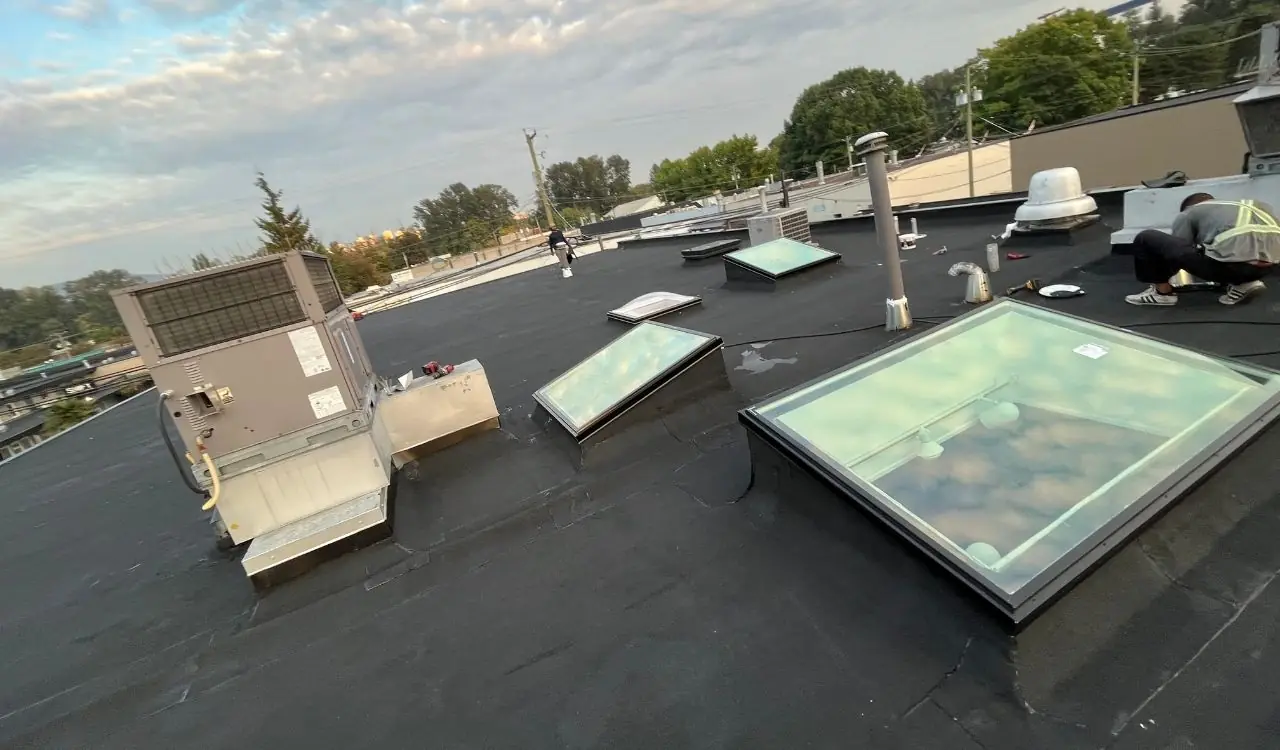
- Very low slope or flat sections. Neither shingles nor metal is the right tool: flat and low slope areas need a membrane system, as explained in our guide to asphalt shingles versus torch-on membrane.
- Strata or heritage rules. Check bylaws and design guidelines before falling in love with either option: some stratas restrict materials and colours.
- Noise sensitive bedrooms under the roof. Talk assembly, not just material: decking, underlayment and insulation decide rain noise far more than the panel or shingle itself.
What to Ask Your Roofer Before You Choose
Ask these questions of any contractor quoting either system, and be wary of one who cannot answer them plainly:
- How many metal roofs have you installed in the Lower Mainland in the last two years, and can I see photos or speak to a customer?
- Which exact profile, material and coating are you quoting, and does the manufacturer warranty cover coastal exposure?
- What underlayment, flashing replacement and ventilation work is included in the written scope?
- How long is your workmanship warranty, what does it cover, and who do I call if something goes wrong?
- Can you quote both metal and shingles on the same scope, so I can compare the two fairly?
- What does the schedule look like, and how do you keep the roof watertight if rain arrives mid-job?
Once you have chosen a material, our step-by-step guide to the roof installation process explains what happens from inspection and tear-off to the final walkthrough, so you know what good work looks like on each day of the job.
The Bottom Line
Metal roofing vs shingles in BC comes down to time horizon, shade, roof shape and budget, in that order. Staying for decades under trees on a straightforward pitched roof, and metal is hard to beat. Selling soon, watching the budget, or working with a complex roof shape, and a quality shingle roof, installed by a crew that nails and flashes it properly, is the sensible choice. Either way, the installer matters as much as the material: the best product on the market still leaks if the valleys and flashing are rushed. If you are weighing the two for your own home anywhere in Vancouver, Surrey, Delta or the wider Lower Mainland, request a free inspection and we will price both options on the same written scope, so the comparison is honest and the decision is yours.