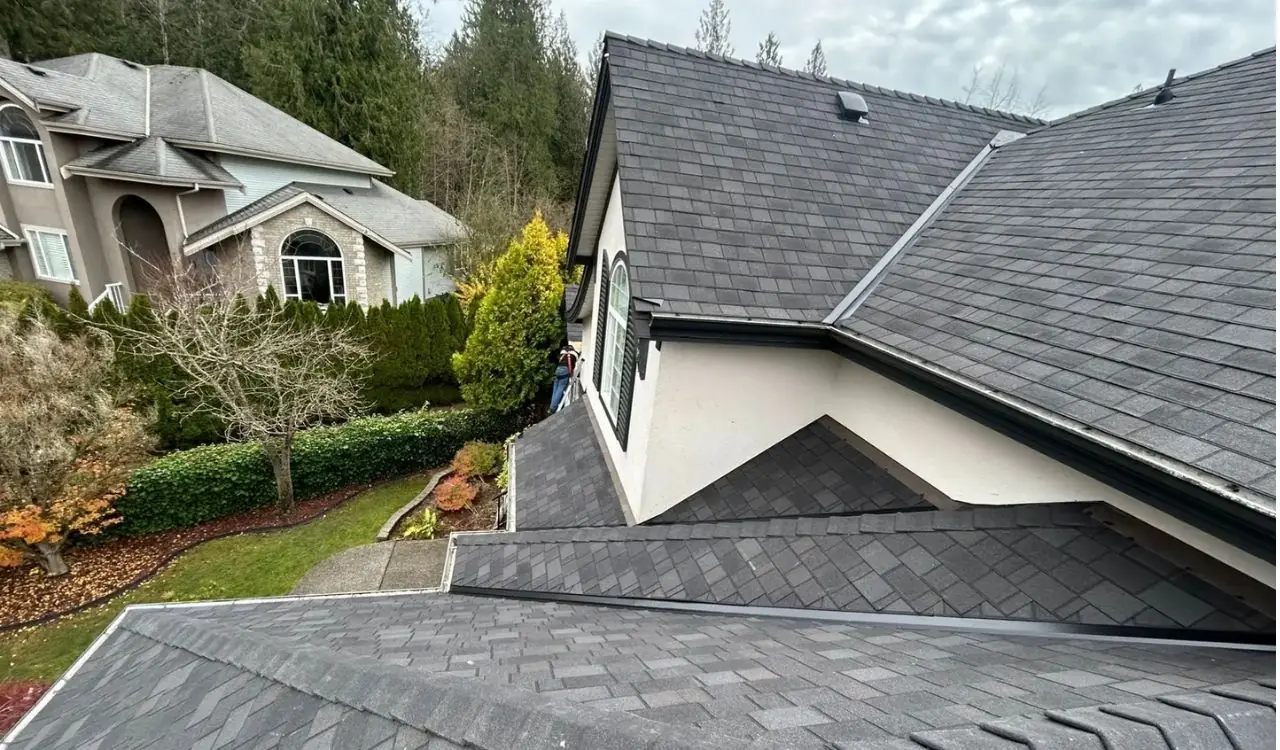
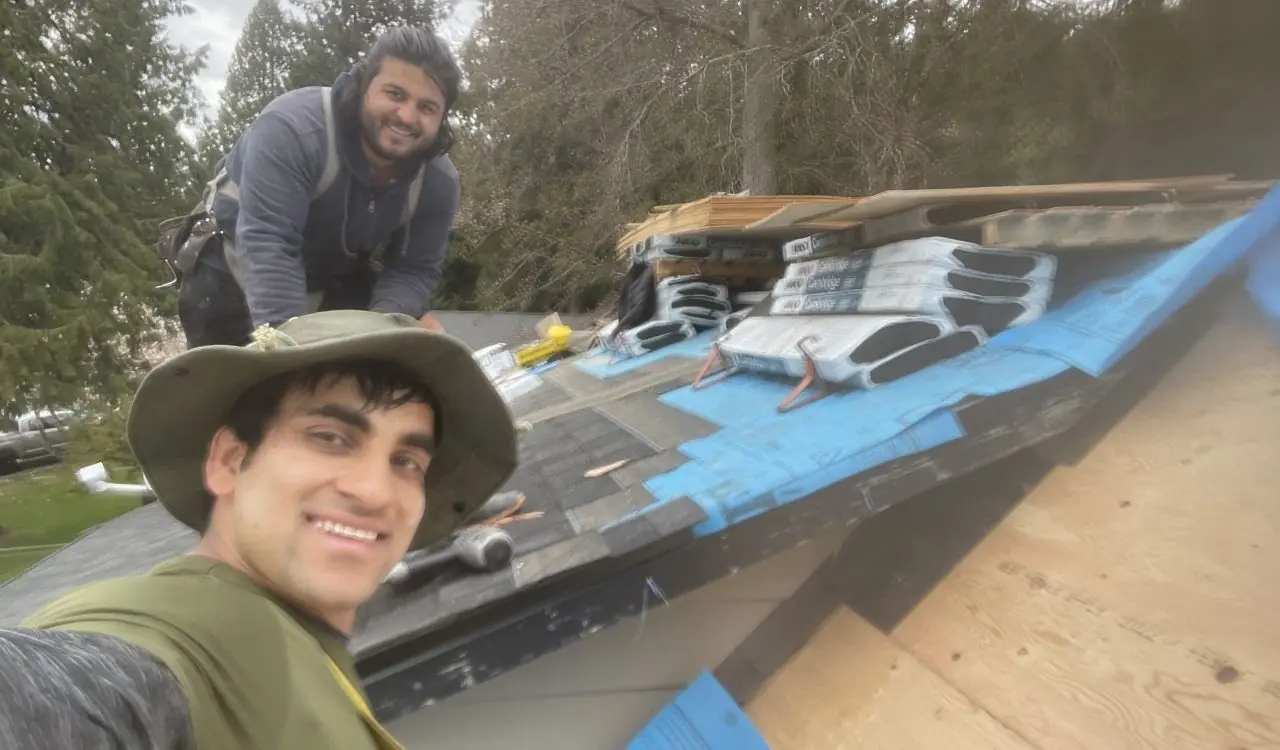
Most roofs do not fail all at once. They send warnings for months or years first: a shingle curling at the edge, dark streaks spreading across a slope, granules collecting in the gutter, a faint stain blooming on the bedroom ceiling. Knowing the signs you need a new roof is what separates a planned replacement on your schedule from an emergency reroof in the middle of a January atmospheric river. On the BC coast, where months of rain, relentless moss and winter wind work a roof harder than almost anywhere else in Canada, those warnings show up earlier and matter more. This guide walks through the signs we look for on every inspection across Vancouver, Surrey and Delta, which ones mean repair is still the smart call, and what to do next when your roof is telling you its time is up.
The 7 Clearest Signs You Need a New Roof
No single sign automatically means replacement. It is the pattern that matters: age plus wear plus water finding its way in. Here are the seven we take most seriously, roughly in order of urgency.
1. Curling, cupping or clawing shingles
Healthy asphalt shingles lie flat. When the edges curl upward (cupping), or the corners lift while the centre stays put (clawing), the shingle has lost its flexibility and its seal. A few curled shingles on a young roof can sometimes be traced to a ventilation problem in one section. Widespread curling across multiple slopes means the shingles are at the end of their service life, and no repair will buy you more than a season or two.
2. Bald patches and granules in the gutters
The sand-like granules on an asphalt shingle are its sunscreen and its armour. Once they wash away, the asphalt underneath bakes in summer sun and cracks. If you are scooping handfuls of granules out of the gutters or downspouts, or you can see dark bald patches where the shingle mat shows through, the roof is shedding its protection. Some granule loss is normal in the first year after installation. Heavy, ongoing loss on a roof past 15 years is one of the most reliable signs you need a new roof.
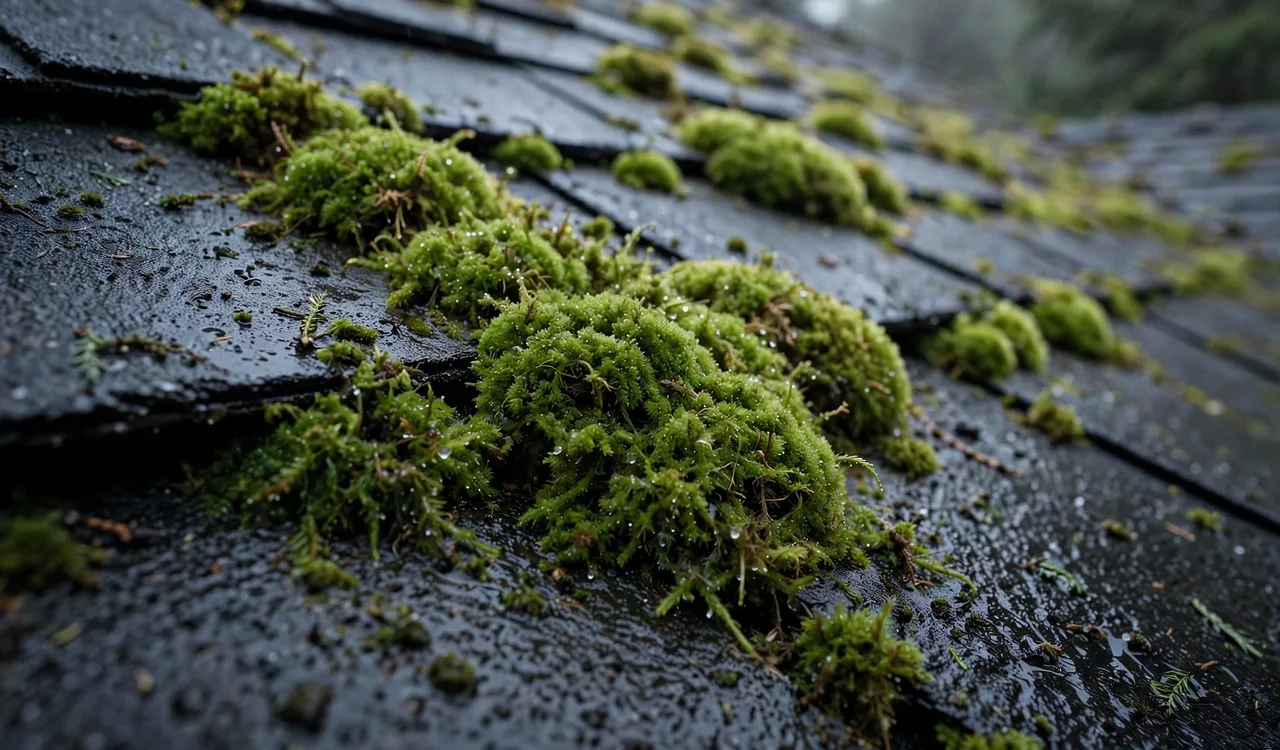
3. Moss that keeps coming back
A little moss on a shaded north slope is a BC coast fact of life. Moss that returns within a year or two of a professional cleaning is different: it means the shingle surface has roughened and is holding moisture, which is exactly what moss needs to thrive. Repeated heavy moss growth lifts shingle edges, works water sideways under the courses and shortens whatever life the roof had left. If you are cleaning the same slopes every year, the roof underneath is usually telling you something. Our guide to roof moss removal costs in Surrey and Vancouver explains when cleaning is still worth it and when it is money pointed at the wrong problem.
4. Water stains, drips or daylight in the attic
Go into the attic on a bright day and look up. Pinpricks of daylight through the roof boards mean water has a path in, full stop. Dark stains on the underside of the sheathing, damp insulation or a musty smell all say the same thing: the roof system is no longer keeping water out. One small stain traced to a single flashing detail can be a repair. Multiple stains, soft or discoloured sheathing, or any sign the deck itself is compromised point to replacement.
5. A sagging roof deck
Stand back from the house and sight along the ridge and the slopes. A healthy roofline is straight. A dip, sag or wave in the deck means the structure underneath is failing, usually from long-term moisture rotting the sheathing or, in older homes, undersized rafters. This is the one sign on this list that should move you to action fastest. A sagging deck is not a cosmetic issue and it is not something to watch for another season. Call for an inspection right away.
6. Failing flashing around chimneys, skylights and valleys
Flashing is the metal that seals every place the roof is interrupted: chimneys, skylights, plumbing vents, walls and valleys. When flashing rusts through, lifts, or was installed without proper step flashing (common on older Lower Mainland homes), water runs straight into the structure. Failed flashing on an otherwise young roof is a repair job. Failed flashing on a roof that is already showing its age is usually the detail that tips the decision toward a full replacement, since a reroof is the only time every flashing gets done properly at once.
7. Age: your roof is past 20 to 25 years
Even a roof that looks fine from the street has a clock on it. Quality architectural shingles typically give 25 to 30 years on the BC coast; basic three-tab shingles more like 15 to 20. If your roof is past 20 years and you cannot find records of when it was installed, assume it is closer to the end than the beginning. Age alone is not an emergency, but age combined with any two or three signs above is. This is also the point where patching stops making financial sense: money spent repairing a 24-year-old roof is money you will spend again on the replacement.
Signs You Need Roof Repair Instead of Replacement
Replacement is not always the answer, and an honest contractor will tell you when it is not. Repair is usually the right call when the roof is under about 15 years old, the shingles are generally flat and sealed, and the problem is localized: one leak traced to a single flashing detail, a handful of shingles lost in a windstorm, a skylight that needs reflashing. The test we use is simple. If fixing the specific problem gives you many more years of service from a roof with plenty of life left, repair it. If the repair is just the first of several you can already see coming, put that money toward the replacement instead. A free roof inspection is the fastest way to know which camp you are in.
Why BC Coast Roofs Age Faster
Vancouver roofs live a harder life than roofs a few hours inland, and it shows in how early the warning signs appear:
- Months of sustained rain: water finds every weakness. Small flashing gaps that would stay dry in a drier climate become active leaks here.
- Moss and algae: our mild, damp winters are ideal growing conditions. North-facing and tree-shaded slopes can need attention years before the sunny side shows any wear.
- Wind: winter windstorms lift aging shingles at the edges and drive rain sideways under them, which is why so many of our calls come after the first big fall storm.
- Freeze-thaw cycles: water that gets under a shingle or into a small crack expands when it freezes, opening the gap a little wider each cycle.
None of this means a BC coast roof is a bad investment. It means the inspection habit matters more here: catching the signs early is how you get the full 25 to 30 years out of architectural shingles instead of 18.
What to Do When You Spot These Signs
Start with what you can check safely from the ground and the attic: sight along the roofline for sagging, check the gutters for granules, look in the attic for daylight or stains, and note the age if you know it. Do not climb onto the roof yourself. Steep or wet slopes are exactly how inspection injuries happen.
Then book a professional inspection. A proper one covers the shingle or membrane condition on every slope, all flashing details, the attic and ventilation, and the gutters and drainage, with photos so you can see what the inspector sees. You should come away knowing whether you are looking at targeted repairs or a full roof replacement, what it will involve, and what it will cost. If replacement is the recommendation, our Vancouver roof replacement cost guide breaks down typical 2026 ranges by home type so you can plan with real numbers.
How Long Should a Roof Last in Vancouver?
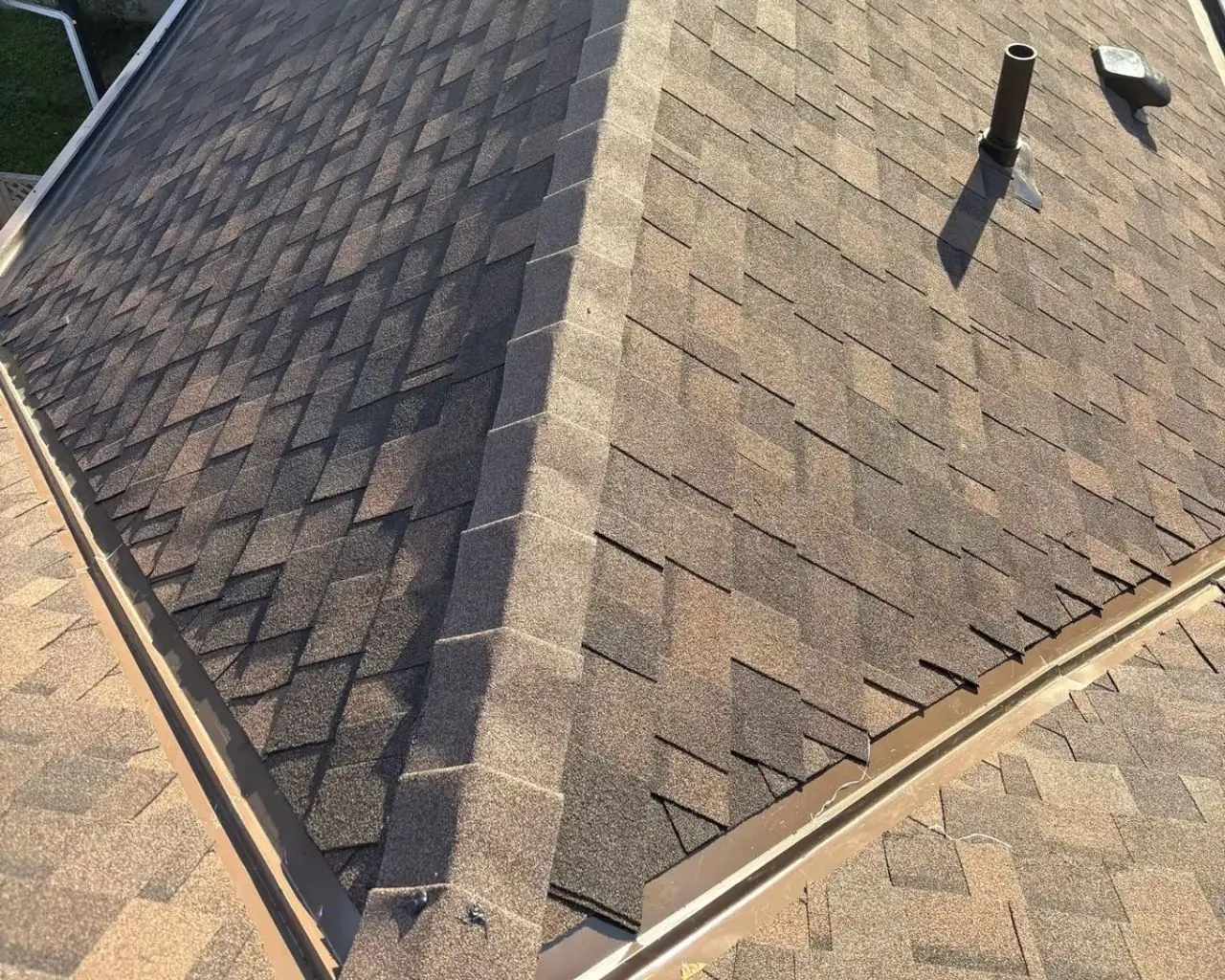
As a rough guide for our climate: basic three-tab asphalt shingles, 15 to 20 years; quality architectural shingles, 25 to 30 years with proper installation, ventilation and maintenance. Ventilation deserves special mention. An attic that cannot breathe cooks shingles from underneath in summer and grows condensation in winter, and we regularly see premature aging traced straight back to blocked soffit vents or missing ridge venting. Whatever material you have, the single biggest favour you can do its lifespan is a professional look every couple of years. Our guide to how often to inspect your roof in Metro Vancouver lays out the cadence.
"Homeowners usually call us two years after they first noticed something. The stain was small, the curling was just one slope. By the time we get up there, the sheathing is involved and the job is bigger. The signs are cheap to check. Ignoring them is what gets expensive."
Scarlet Roofing & Gutters, Project EstimatorOur Recommendation
If you recognized two or more of the signs above, do not wait for the next big storm to make the decision for you. Book a free inspection, get the photos and the straight answer, and plan the work on your timeline. If your roof still has good years left, we will tell you that too. We serve homeowners across Vancouver, Surrey, Delta and the wider Lower Mainland, and every inspection comes with a written, itemized quote when work is needed.