Gutter guards promise a simple deal for homeowners in the Lower Mainland: fit them once, and never clean your gutters again. If you live under fir trees in Vancouver, Surrey or Coquitlam, that promise is tempting, because gutters here fill fast. Fall leaves, fir needles and moss wash off the roof and into the channel, and a blocked gutter overflows onto fascia, siding and foundations. The honest answer is that gutter guards help a lot of homes, and waste money on others. Whether they are worth it for your house depends on your trees, your roof, the type of guard, and the state of the gutters underneath. This guide compares the main types sold in BC, how they handle our rain, what they cost, and when to skip them.
1. What Gutter Guards Actually Do
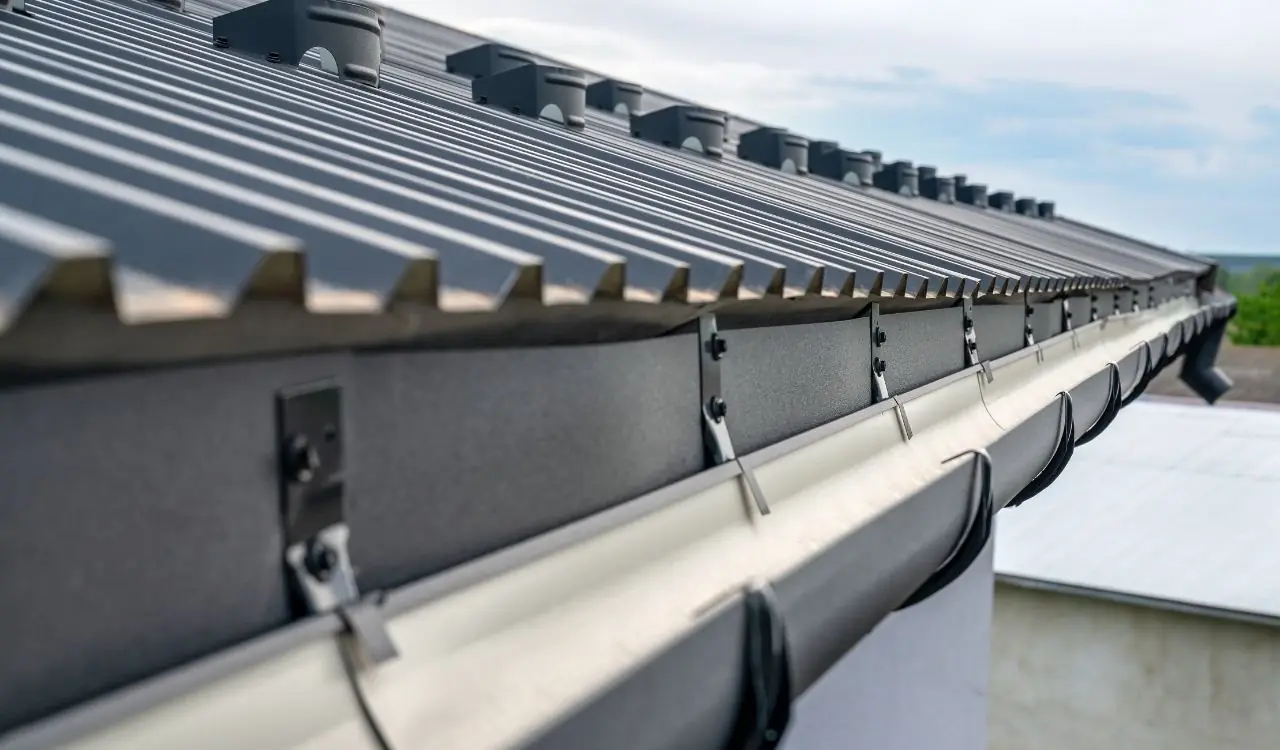
A gutter guard is a cover, screen or insert that sits over or inside the gutter channel. Its job is narrow: keep leaves, needles and larger debris out of the channel while letting rainwater through. That is all it does. Guards do not fix a gutter that sags, leaks at the seams or drains the wrong way. They do not stop moss growing on your roof, and they do not replace cleaning entirely. What they do, when matched to the house, is stretch the time between cleanings from months to a year or more, and stop the sudden overflow when a downspout outlet clogs during a storm. Fine silt and shingle grit still get in, so a guard stretches the time between cleanings rather than removing the job.
2. The Main Types of Gutter Guards Sold in BC
Most guards sold in the Lower Mainland fall into five types, and the differences matter more than the brand name on the box.
Micro-mesh guards
A fine stainless steel or aluminium mesh stretched over a frame. The openings are small enough to block fir needles, the key advantage in BC, where Douglas fir and cedar needles defeat most other designs. Micro-mesh is the best all-round performer for homes under conifers, but it costs more, and the mesh needs brushing off once or twice a year, as needles and pollen mat across it.
Perforated metal screens
A metal panel with punched holes, fitted over the gutter. Cheaper than micro-mesh and sturdier than plastic, but the holes are large enough for fir needles to slip through, and needles that get in tend to stand upright in the holes and trap more debris. A reasonable choice for homes whose main problem is broad leaves rather than needles.
Foam inserts and brush guards
The cheapest options, and the weakest in our climate. A foam block fills the gutter and lets water filter through, but it holds moisture, grows mould and algae, and degrades over a few years. A brush is a long cylinder that sits inside the gutter and catches leaves on its bristles, but leaves pile on top of it, needles weave into it, and removing a brush full of wet debris is a messy job. We rarely recommend either on the BC coast.
Reverse curve (surface tension) guards
A solid cover with a curved nose. Rainwater follows the curve into the gutter while leaves fall off the edge. It handles heavy rain well when installed at the right angle, but it is the most expensive option, needs precise installation, and fir needles can still cling to the curved surface. It also usually requires lifting the bottom row of shingles, which brings the roof risks covered in section 8.
3. How Gutter Guards Handle Lower Mainland Rain
Our rain is the real test of any guard, and it is where cheap products fail. The Lower Mainland gets intense bursts, and a guard has to pass a large volume of water quickly or the rain sheets straight over the edge. That is called overshoot, and it is the most common complaint about gutter guards here. A guard that works fine in a light drizzle can overflow badly in a November downpour, dumping water onto the fascia and the ground beside the foundation.
Micro-mesh and well-fitted reverse curve guards handle heavy rain best. Foam and brush inserts slow water down the most, which is a problem when the rain is coming down hard. Before you buy, ask the installer how the guard performs in heavy rain specifically, and what happens when the mesh surface gets coated with pollen or fine debris. A guard that needs a perfectly clean surface to work will not stay perfect for long.
4. Fir Needles, Leaves and Moss: The Real Test
Most gutter guard marketing is written for places with big deciduous trees. The Lower Mainland is different. Our main debris is fir and cedar needles, which are thin enough to defeat screens and tough enough to mat into a felt layer on top of mesh. Add the moss that grows on shaded BC roofs and washes down in clumps every winter, and you have the two problems that decide whether guards work on your house.
If your roof is heavily shaded and mossy, guards will not solve the problem on their own. Moss clumps are heavy and wet, and they sit on top of a guard and block water from getting through. Deal with the moss first: our guide to roof moss removal costs in Surrey and Vancouver explains what removal involves. Once the roof is clean, guards can keep the channel clear for much longer.
For needles, micro-mesh is the only type that reliably keeps them out. Choose a perforated screen or a brush under firs instead, and expect needles inside the gutter within the first season, plus a harder cleaning job, because the guard has to come off first.
5. What Gutter Guards Cost in BC
There is no single price for gutter guards, because the cost depends on the guard type, the total gutter length, the number of storeys, and whether the gutters need cleaning or repair first. As a rough guide, foam and brush inserts are the cheapest, perforated screens sit in the middle, and micro-mesh and reverse curve systems cost the most.
That is why a per-foot price quoted over the phone means very little: a company that has not seen your roofline cannot know how much gutter you have, how accessible it is, or whether the fascia and hangers are sound enough to carry guards. Get a written, itemised quote after an on-site look, with the guard type named, the total length, and any cleaning or repair priced separately. Fitting guards to gutters that need replacing means paying to protect a gutter that will fail anyway, the most common way homeowners waste money on this product.
6. When Gutter Guards Are Worth It
Guards earn their money in a few clear situations. If one or more of these sounds like your house, they are probably worth the quote.
- You have large trees overhanging the roof. If you clear gutters two or three times a year, guards can cut that to an annual check, a real saving in time and ladder work.
- Your gutters are hard to reach. A two or three storey home, or gutters over a steep slope, makes every cleaning expensive and awkward. Guards reduce how often anyone needs to go up there.
- You have had overflow damage before. If a blocked outlet has already caused fascia rot or water in the basement, guards are cheap insurance against a repeat, provided the drainage is sound.
- Your gutters are in good shape. Guards work best on straight, well-sloped gutters with solid fascia and hangers. On a healthy system, they extend its life by keeping it clear and dry between cleanings.
7. When Gutter Guards Are Not Worth It
Guards are a poor spend in the opposite situations, and an honest installer will tell you so.
- No trees near the house. If your gutters only collect a little dust and the odd leaf, they may need cleaning once a year at most. Guards would save you almost nothing.
- Your gutters are already failing. Sagging runs, leaking seams, rust or a bad slope will not be fixed by a cover. If you are seeing the warning signs your gutters need replacing, put the money into gutter repair and replacement first, then consider guards on the new system.
- Built-in (box) gutters. The concealed channels on older Lower Mainland homes are not designed for standard guards, and fitting one can trap water inside the roofline where you cannot see it. These systems need a different approach, decided after an inspection.
- Heavy moss on the roof. As covered above, moss clumps defeat guards. Clean the roof first, or the guard becomes a shelf that holds wet moss against the roof edge.
- You expect zero maintenance. Every guard type still needs an occasional check and a brush-off. If the sales pitch is "never touch your gutters again," it is overselling.
8. Gutter Guards and Your Roof: What to Watch
How a guard is attached matters as much as which guard you buy, because a bad installation can damage the roof it is supposed to protect. Some systems slide under the bottom row of shingles, lifting them and breaking the seal, which lets wind-driven rain underneath. Others screw into the fascia, which is fine if the fascia is solid, and a problem if it is soft or rotting. Ask the installer exactly how the guard fastens and whether it touches the shingles at all. Clip-on systems that fasten to the gutter lip and the fascia, without lifting shingles, are the safest choice for most asphalt shingle roofs.
There is also a warranty question worth asking before anyone starts. Some shingle manufacturers treat lifting shingles to fit a guard as a modification that can affect warranty cover, so check the terms on your roof or ask the installer to confirm in writing that their method does not void it. The same caution applies to ice: guards do not cause ice dams, but a guard holding a mat of wet debris at the roof edge can keep that edge damp through a cold snap. If you are unsure about your roof edge or fascia, start with a roof inspection: photos of what we find, and an honest call on whether guards make sense for your house.
9. Cleaning and Maintenance With Guards Installed
Gutter guards change the maintenance job, they do not remove it. Instead of scooping wet leaves out of the channel twice a year, brush debris off the top of the guard once a year, usually in late fall, and check that water still flows freely through the downspouts. On a micro-mesh system, that brushing matters: a thin film of pollen and grit can seal the mesh surface over a summer, and the first heavy fall rain will then run straight over the top.
Plan on a professional check every year or two to clear the fine silt inside the channel. Keep the downspout outlets clear as well: guards protect the channel, but a blocked outlet will back the whole system up regardless of what sits on top.
10. Fix the Gutter First, Then Add Guards
The single most useful rule for this purchase is the order of the work: gutters first, guards second. Guards fitted to a sound gutter system are a genuine improvement. Guards fitted to a gutter with the wrong slope, a sagging run or a rotting fascia just hide the problem until it gets expensive. Before you spend anything on guards, have someone check the slope, hangers, seams and fascia, and fix what needs fixing. On many older Lower Mainland homes, that check turns up a gutter near the end of its life anyway, and the right move is a new gutter with guards fitted from the start. If the roof above the gutter is also near the end of its life, price the two jobs together: our roof replacement cost guide for Vancouver explains what drives the roofing cost.
The Bottom Line
Gutter guards are worth it for homes with trees overhead, hard-to-reach gutters, or a history of overflow, provided the gutters underneath are sound and the guard type matches the debris your trees actually drop. Micro-mesh is the best bet under fir and cedar, perforated screens suit broad leaves, and foam and brush inserts are rarely worth it in our climate. They are not worth it if you have no trees, if your gutters are already failing, if you have built-in channels, or if your roof is heavily mossed. No guard removes maintenance entirely: expect an annual brush-off and a check before winter. If you would like an honest read on your own gutters, book a free inspection. We will show you photos of what we find and tell you straight whether guards will help your house or whether your money is better spent on the gutters themselves. We serve homeowners across Vancouver, Surrey, Delta and the wider Lower Mainland.