Flat roof replacement in Vancouver is a different job from replacing a pitched shingle roof, and it starts with a different question: not which shingle, but which membrane system will keep standing water out for the next twenty years. Vancouver rain is the deciding factor. A flat roof holds water instead of shedding it, so the membrane, the drainage and the flashing details matter more than the brand name on the roll. This guide walks through the four flat roof replacement options that suit Lower Mainland homes, torch-on modified bitumen, TPO, EPDM and PVC, with costs, lifespans and the signs that mean replacement rather than another repair. It is written for homeowners in Vancouver, Surrey, Delta and the wider Lower Mainland.
When Flat Roof Replacement Beats Repair
Not every flat roof problem needs a new roof. A single lifted seam or a small puncture is a repair, and we say so when that is the case. Replacement becomes the honest call when the problems are widespread rather than local.
- Widespread blistering. A few small blisters can be monitored. Blisters across the whole roof mean trapped moisture under the membrane, and patching them one by one buys months.
- Saturated insulation below. If the insulation under the membrane is wet, it no longer insulates and it no longer supports the membrane properly. A moisture survey finds this before the tear-off starts, so there are no surprises in the quote.
- Seams failing in several places. One failed seam is a repair. Seams lifting across the roof mean the membrane system has reached the end of its life.
- Ponding that never drains. Water still sitting days after rain means the drainage has failed or the roof has sagged. A new membrane over a roof that cannot drain will fail the same way.
- Age. A torch-on membrane past 20 to 25 years old owes you nothing, and a single-ply membrane past 20 years is in the same position. If the roof is that old and leaking, replacement is usually cheaper than another round of patching.
- Deck damage. Soft spots underfoot suggest wet decking below. That needs a full tear-off to fix properly, because the deck has to be seen and repaired.
Two or three of these together usually means replacement. One on its own is often a repair. A roof inspection pins down which one it is, with photos you can see for yourself, before you spend anything on a new roof.
Torch-On Modified Bitumen: The Local Standard
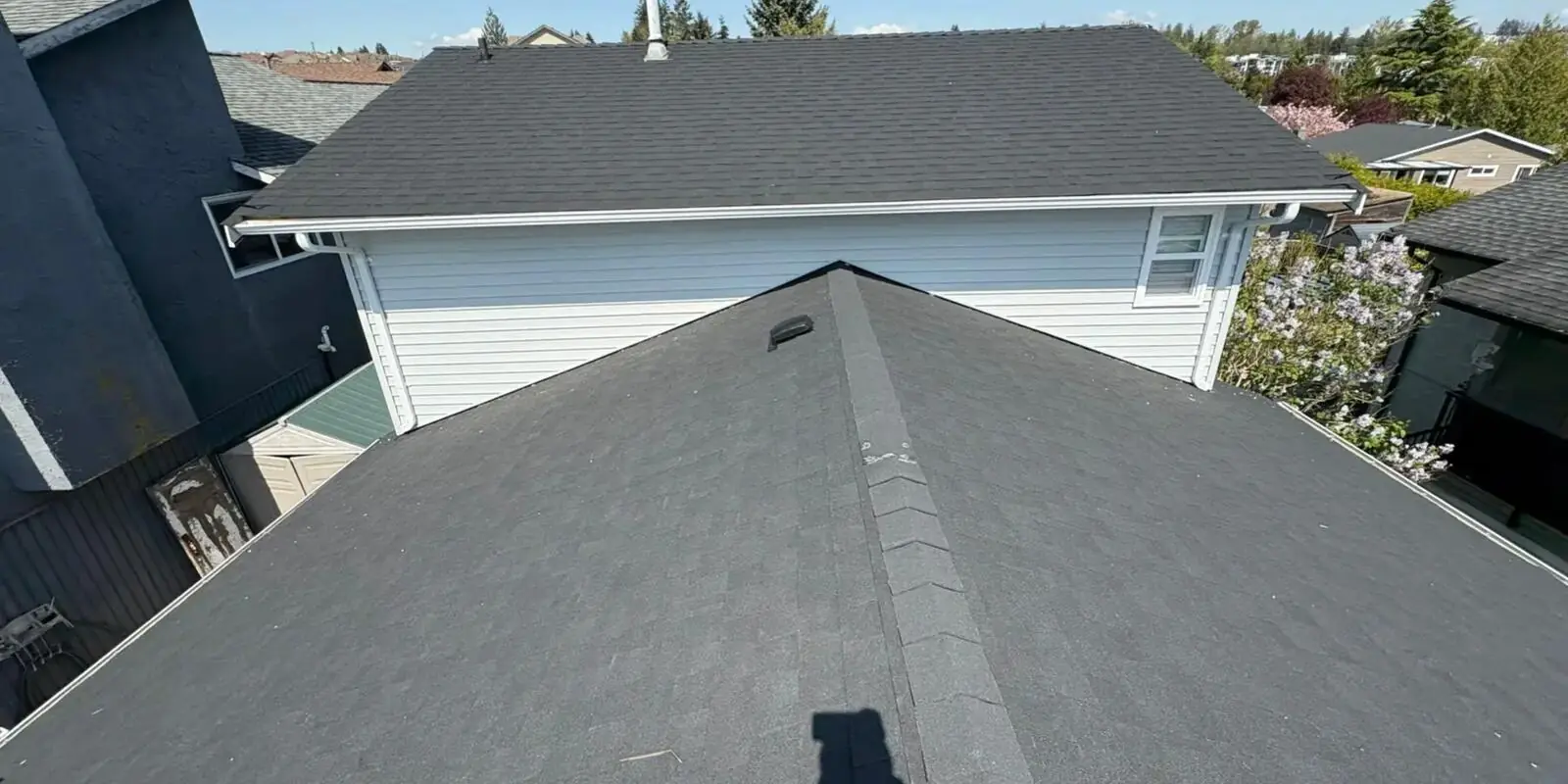
If there is a default flat roof system for the Lower Mainland, it is torch-on modified bitumen. It is a membrane made from asphalt refined with rubber-like polymers and reinforced with a polyester or fibreglass mat, installed in rolls that are heat welded at every seam into one continuous waterproof skin. It suits our climate because it does not depend on slope the way shingles do, and a properly welded torch-on roof handles our rain and temperature swings without complaint.
There are two common residential systems. A two ply system, base sheet plus granulated cap sheet, typically lasts 20 to 25 years and suits most garages, additions and dormers. A three ply system adds an interply sheet, typically lasts 25 to 30 years, and suits larger flat roofs, roofs over living space and any roof that gets foot traffic. The granulated cap sheet is the weathering surface: its mineral granules shield the bitumen from UV, which is what breaks membranes down over time.
As general market guidance for the Lower Mainland, a two ply torch-on roof replacement typically runs $9 to $14 per square foot installed, and three ply $12 to $18, including labour, materials, flashings and disposal. Tear-off of the old membrane, tapered insulation to fix ponding and complex parapet flashing add to that. Your written itemised quote follows an inspection. Our flat roof torch-on service covers two and three ply systems across Surrey, Vancouver and the Lower Mainland, and our flat roofing systems guide explains the materials in more detail.
TPO: The White Single-Ply Option
TPO, short for thermoplastic polyolefin, is a single-ply membrane with heat-welded seams, supplied in wide white sheets. Its white surface reflects more sunlight than a dark membrane, and its welded seams give it the same continuous-skin advantage as torch-on. It suits larger flat roofs and commercial buildings, where wide sheets mean fewer seams across a big area.
Because it is a single layer, seam quality matters more than with a multi-ply system: there is no second layer backing up a bad weld. With proper installation and basic maintenance, a TPO roof typically gives around 20 years of service. Pricing is quoted per project after inspection, and depends on roof size, insulation and flashing complexity, in the same way torch-on pricing does.
EPDM Rubber: The Simple, Tough Membrane
EPDM is a synthetic rubber membrane, usually black, installed in large sheets with glued or taped seams. It is one of the most flexible membranes available, which stays pliable through cold snaps instead of going stiff and cracking, and it resists UV well. It suits simple roofs with few penetrations, such as a plain garage or addition roof, where the large sheets can cover the area with very few seams.
The trade-off is the seams. Glued and taped seams are only as good as the preparation behind them, and EPDM relies on them more than a heat-welded system does. On a roof with many drains, vents and parapets, a welded system is usually the safer choice. With proper installation and maintenance, an EPDM roof typically gives around 20 years of service.
PVC: The Choice for Restaurants and Commercial Roofs
PVC membrane is a white single-ply system with heat-welded seams, similar in concept to TPO but with one distinct advantage: it resists grease, oil and many chemicals that break other membranes down. That makes it the standard choice for restaurants and commercial kitchens, where exhaust fans discharge grease onto the roof.
For a typical home it is usually more membrane than the roof needs, and it is priced accordingly, but for commercial and strata buildings, and for any flat roof with a kitchen exhaust above it, it is the right tool for the job. Like TPO, it is a welded system, so the quality of the welding decides how long it lasts. With proper installation and maintenance, a PVC roof typically gives around 20 years of service.
Overlay or Full Tear-Off?
One of the first decisions in any flat roof replacement is whether the new membrane goes over the old one or the old roof comes off completely. An overlay, where the new system is installed over the existing membrane, can work, but only when three conditions are met: the existing membrane is dry underneath, the insulation below is dry and sound, and the deck is solid. We only overlay once, and only when the moisture survey is clean.
A full tear-off is the right call when the insulation is wet, the deck is damaged, the membrane has failed in several places, or the roof already carries an overlay from a previous job. It costs more upfront, but it is the only way to see the deck, replace wet insulation and fix drainage properly. It also resets the roof completely, so the new membrane starts life on a sound base. The moisture survey we do at inspection is what decides this, and we show you the evidence either way before you choose.
Drainage and Insulation: The Details That Decide Lifespan
Here is the uncomfortable truth about flat roofs: the membrane gets the attention, but drainage decides the lifespan. A perfect membrane under permanent standing water will still fail early, and most manufacturer warranties exclude damage from ponding. When we assess a flat roof, drainage comes first.
That means proper falls to interior drains or scuppers, drains kept clear of leaves and debris, and tapered insulation to build slope where the structure has none. Many of the flat roofs we replace failed not because the membrane was bad, but because water had nowhere to go. Fixing the drainage is often the most valuable part of the job, and it is built into our quote rather than treated as an extra. After installation, keep drains and scuppers clear, especially each fall when the leaves come down. Our guide to how long a roof lasts in Vancouver's climate explains what shortens a roof's life and what stretches it.
What Flat Roof Replacement Costs in Vancouver
Flat roofing is usually priced by the square foot, because every flat roof is a different size and a different puzzle of drains, parapets and penetrations. The figures below are general market guidance for the Lower Mainland, not a quote for your roof. Your written quote from us will be itemised after we see the roof in person.
- Two ply torch-on: $9 to $14 per square foot installed. The most common choice for residential work.
- Three ply torch-on: $12 to $18 per square foot installed. Larger roofs, roofs over living space, and maximum longevity.
- Tear-off of the old membrane: priced by condition, with disposal included in our quotes.
- Tapered insulation to fix ponding: quoted per project.
- TPO, EPDM and PVC: quoted per project after inspection, depending on roof size, insulation, access and flashing complexity.
What moves you within or beyond those ranges: roof size, because small roofs cost more per square foot with minimum charges; whether the old membrane comes off or the new system goes over it; how much tapered insulation is needed to correct drainage; access and height; and parapet and flashing complexity. Our roof replacement cost guide for Vancouver breaks down the same numbers in more detail by home type.
Choosing the Right System for Your Roof
There is no single best flat roof system, only the best one for your roof. Here is how the choice usually falls out for the homes and buildings we work on.
- Garage, addition or dormer: two ply torch-on. Proven here, fairly priced, and the right lifespan for the job.
- Full flat roof over living space: three ply torch-on, or TPO on a larger roof. The extra ply earns its keep where a leak would land on a bedroom.
- Large or commercial roof: TPO, with its wide sheets and welded seams, or PVC where grease or chemicals are involved.
- Restaurant or commercial kitchen: PVC, because nothing else stands up to grease discharge the same way.
- Simple, low-traffic roof with few penetrations: EPDM, with its flexibility and long track record.
If the flat section is part of a larger reroof, price it with the pitched roof as one job: the crew, the access and the flashing details are shared. Our roof replacement and reroofing service covers the full picture, pitched and flat together.
Mistakes to Avoid With a Flat Roof Replacement
- Putting shingles on a flat slope. Shingles rely on slope to shed water. On a flat or low-slope section, water sits rather than running off, which will cause shingle roofing to fail quickly and void most manufacturer warranties. Our comparison of asphalt shingles vs torch-on membrane explains why flat sections need a continuous membrane.
- Reusing old flashing. Old flashing looks fine from above and fails from below. A new membrane on old flashing is a leak with a delay built in.
- Ignoring drainage. A new membrane over a roof that cannot drain will fail the same way the old one did. Falls and tapered insulation are part of the job, not an optional extra.
- Skipping the moisture survey. Without one, nobody knows whether the insulation below is wet, and an overlay over wet insulation is money thrown away.
- Choosing on price alone. The cheapest flat roof quote is usually the one that skips the tapered insulation, the new flashing or the moisture survey. Those are exactly the parts that keep the roof dry.
- No maintenance plan. A flat roof needs its drains cleared each fall and an annual look at seams and flashings.
The Bottom Line
A flat roof replacement is a bigger decision than a shingle reroof, because the membrane is only part of the job: the drainage, the insulation and the flashing details decide whether the new roof lasts twenty years or five. Torch-on remains the proven standard for most Lower Mainland homes, with TPO, EPDM and PVC each earning their place on the right roof. If your flat roof is anywhere in Vancouver, Surrey, Delta or the wider Lower Mainland, book a free inspection and we will walk the roof, test for trapped moisture, and give you a written report and an itemised quote for the options that fit your home.